








Raw materials are up, energy is unpredictable, and shipping is facing intense challenges. Most engineering and manufacturing leaders focus on these big challenges, and you can see why. UK prices are rising at their fastest rate in nearly three years, with +31% of manufacturers increasing prices. Sector growth is forecast at just 0.9% for 2026 (after contracting in 2025), and Make UK has described the year as starting on a "fragile footing".
These costs move quickly and show up fast. But the thing that comes up a bit later in conversations is what’s happening inside the business. Plans take longer to agree, projects need more adjustment than expected, and teams are checking and rechecking who is actually available before committing to anything.
A lot of that traces back to how work is being planned across people and projects. And for many engineering and manufacturing firms, that still relies heavily on spreadsheets.
But when it comes down to it, in 2026, you need a better way to plan.
Retain gives you a shared view of projects, people, and capacity, so decisions don’t rely on chasing updates across the business.
👉 Book a demo to see how it works
Spreadsheet-driven resource planning in engineering and manufacturing firms
Most engineering and manufacturing firms tend to rely too heavily on spreadsheets and whiteboards. You might have a project sheet here, a resource tracker there, and a handful of experienced managers who know how everything fits together.
It’s never been an efficient way to run a business. But the bigger issues start when the volume and complexity of work increases. More projects run at the same time. The same people are needed across multiple jobs, often because they’re the ones managers know and trust. Meanwhile, other capable people across the business are overlooked simply because their skills aren’t easy to see or compare. Plus, timelines overlap tighter, and customers expect faster turnaround.
At this point, using spreadsheets for resource planning really affects the numbers.
You can see it in a few places.
- A specialist is booked across two projects without anyone spotting it early enough. Both projects slow down, and neither hits the original timeline.
- Another team adds buffer to protect delivery because they are not fully confident in the plan. That time gets blocked out, even if it is not used productively.
Meanwhile, decisions take longer. Project managers check availability, then sense-check it with line managers, then adjust again once priorities change. What should take minutes turns into hours across multiple people.
This leads to:
- ❌ Projects running longer than planned
- ❌ Fewer projects completed over the same period
- ❌ Higher reliance on overtime to recover lost time
- ❌ Capacity that exists in the business but never gets used
I find this is where it becomes more than a planning issue. It starts to affect how much work the business can actually deliver, and how profitable that work is once it’s done.
And when margins are already tight, that’s where the impact is felt
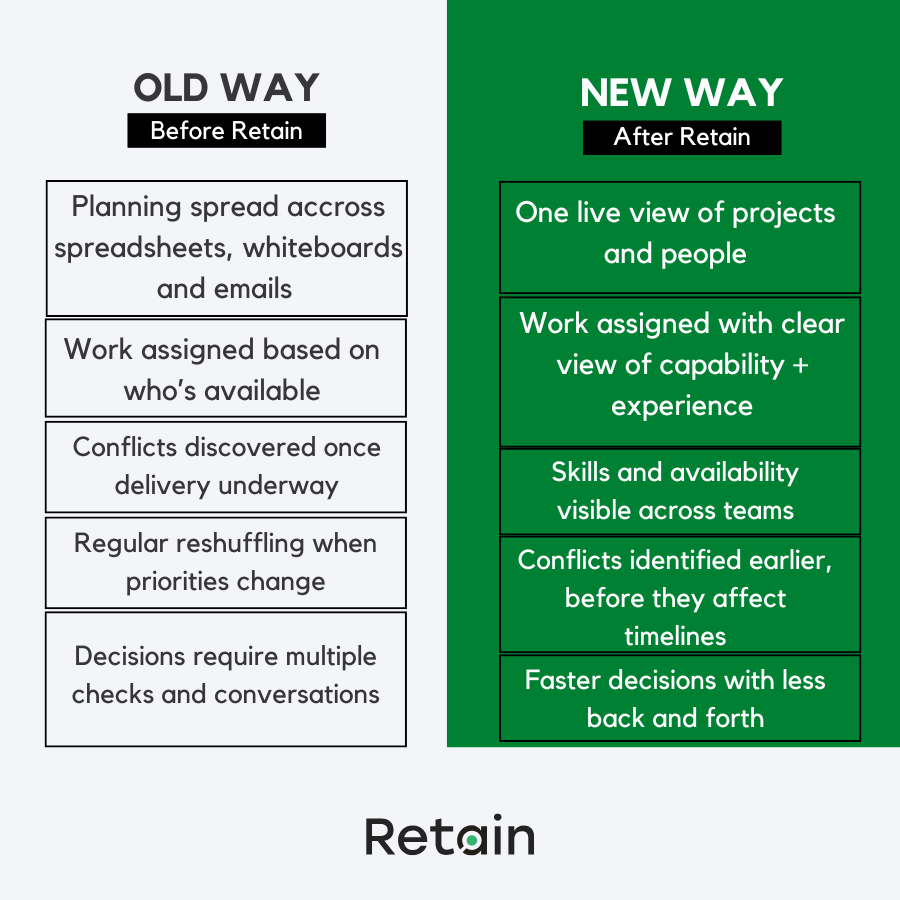
Resource planning in engineering and manufacturing: The old way vs the new way
Up to a point, the current way of planning may have been just about manageable. People know where things are, or at least who to ask. Work gets assigned, adjusted, and delivered. The difficulty is what happens as volume increases. More projects, tighter timelines, and more shared resources mean the same approach starts taking more effort to hold together.
That’s where the difference between how firms have traditionally planned and how they’re starting to operate becomes more obvious.
Old way vs how planning is evolving
What this means day to day
Decisions that used to take a chain of messages and meetings happen much faster. Teams spend less time confirming information and more time acting on it. The same people are no longer pulled into every critical task, which spreads workload more evenly across the business.
I find this is where things start to feel different for operations leaders. Not because planning has become more sophisticated, but because it becomes easier to rely on.
If that’s something you’re starting to look at, Retain can show you how other firms are bringing planning into one place and making it easier to work from. If you’re keen to learn more, you can book a demo to see how it works.
Engineering and manufacturing resource management best practices
The strongest planning improvements usually start with the right tech. Solutions like Retain, can mean faster project decisions, better use of specialist teams, fewer hours lost to reshuffling, and a more accurate view of what the business can deliver with the people it already has.
Here’s how:
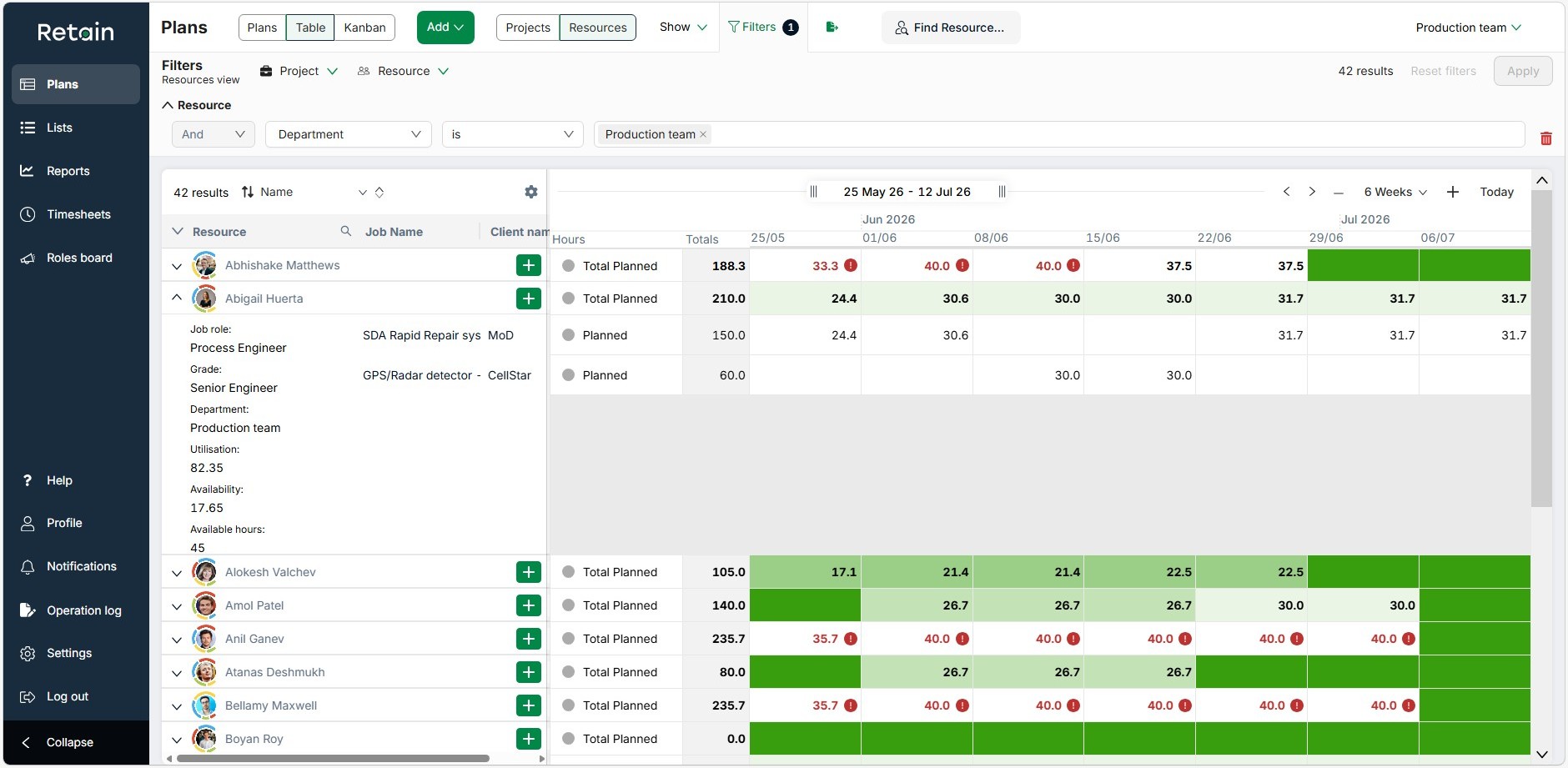
#1. Bring projects and people into one shared view
When teams are working from separate spreadsheets, each decision needs a round of checking before anyone can act. That might feel manageable in isolation. Across multiple projects, it slows down how quickly work can be committed and started.
A shared view changes the pace of those conversations. Instead of asking whether the data is up to date, teams can focus on what needs to happen next.
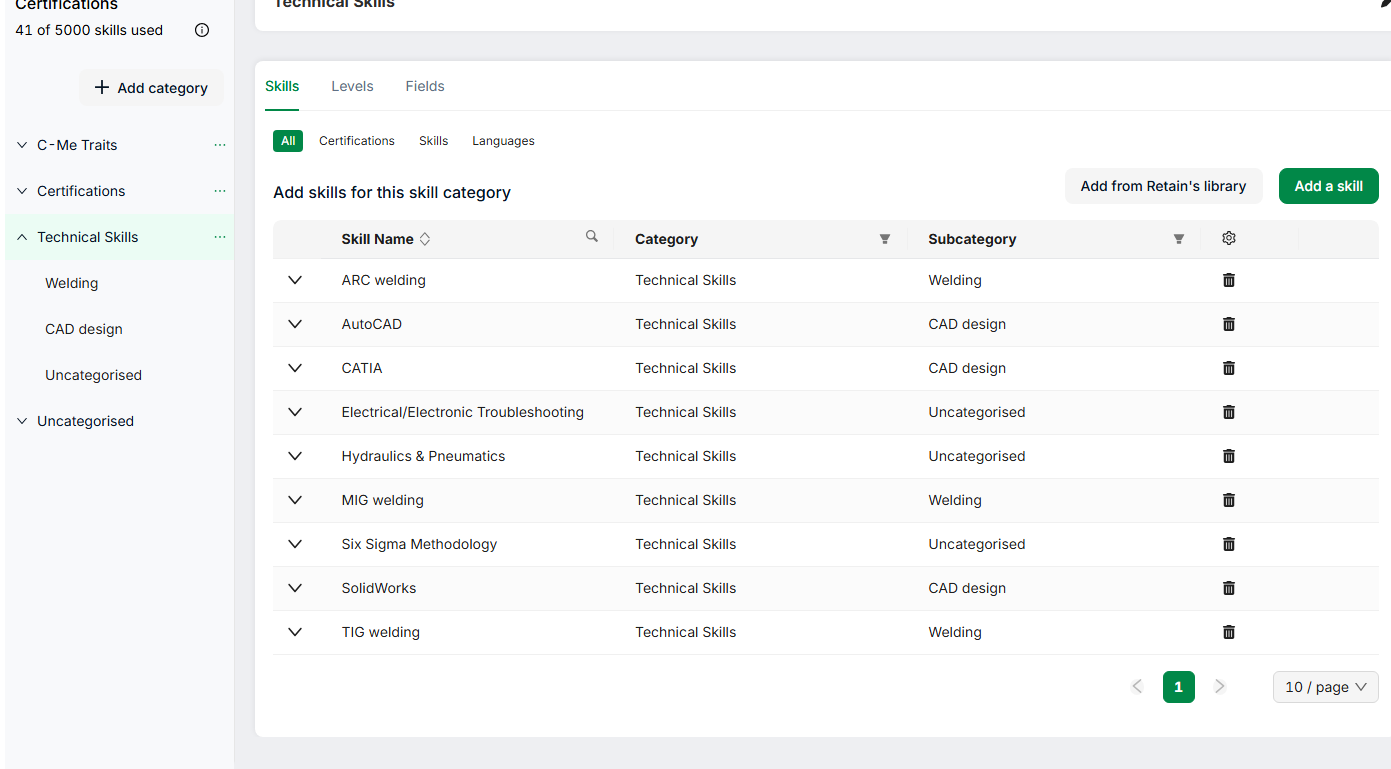
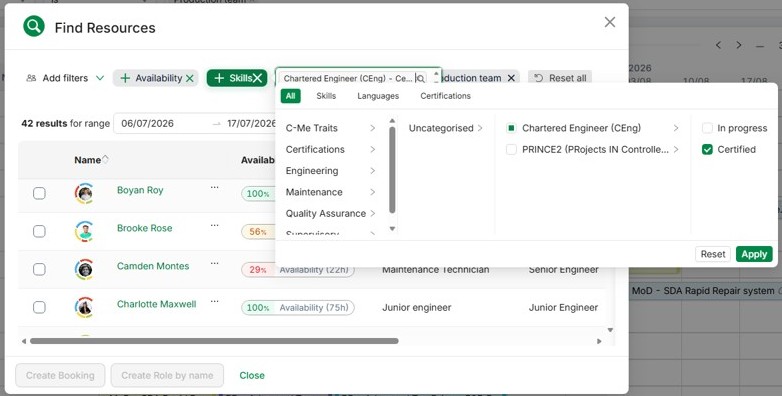
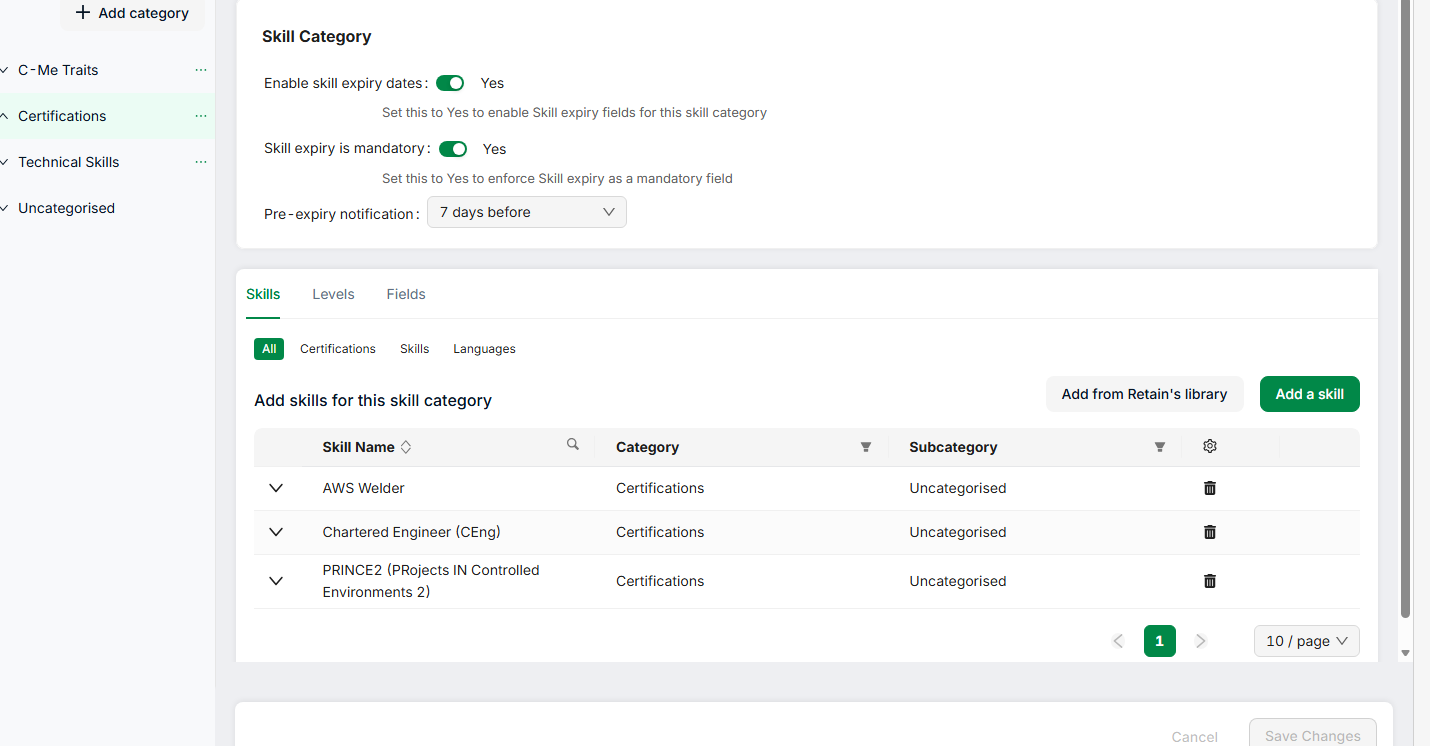
#2. Make capability visible across the business
In many engineering and manufacturing firms, knowledge of who can do what ends up in the heads of managers. Making capability visible across the business spreads that knowledge. It becomes easier to assign work based on experience, recent project history, and suitability, rather than relying on memory or familiarity.
You tend to see workload distributed more evenly as a result, with less reliance on the same individuals being pulled into every critical task.
#3. Shorten the path from enquiry to decision
A useful way to assess planning is to see how long it takes to answer a basic question. For example, can we start this project next month? In a lot of engineering and manufacturing firms, that answer involves several steps. Checking availability, confirming with managers, adjusting for other work, then revisiting once priorities change.
Each step adds time, and that time affects how quickly the business can respond to new opportunities. When planning data is easier to rely on, that path becomes shorter. Fewer checks are needed, and decisions move forward with more confidence.
#4. Keep planning connected to live delivery
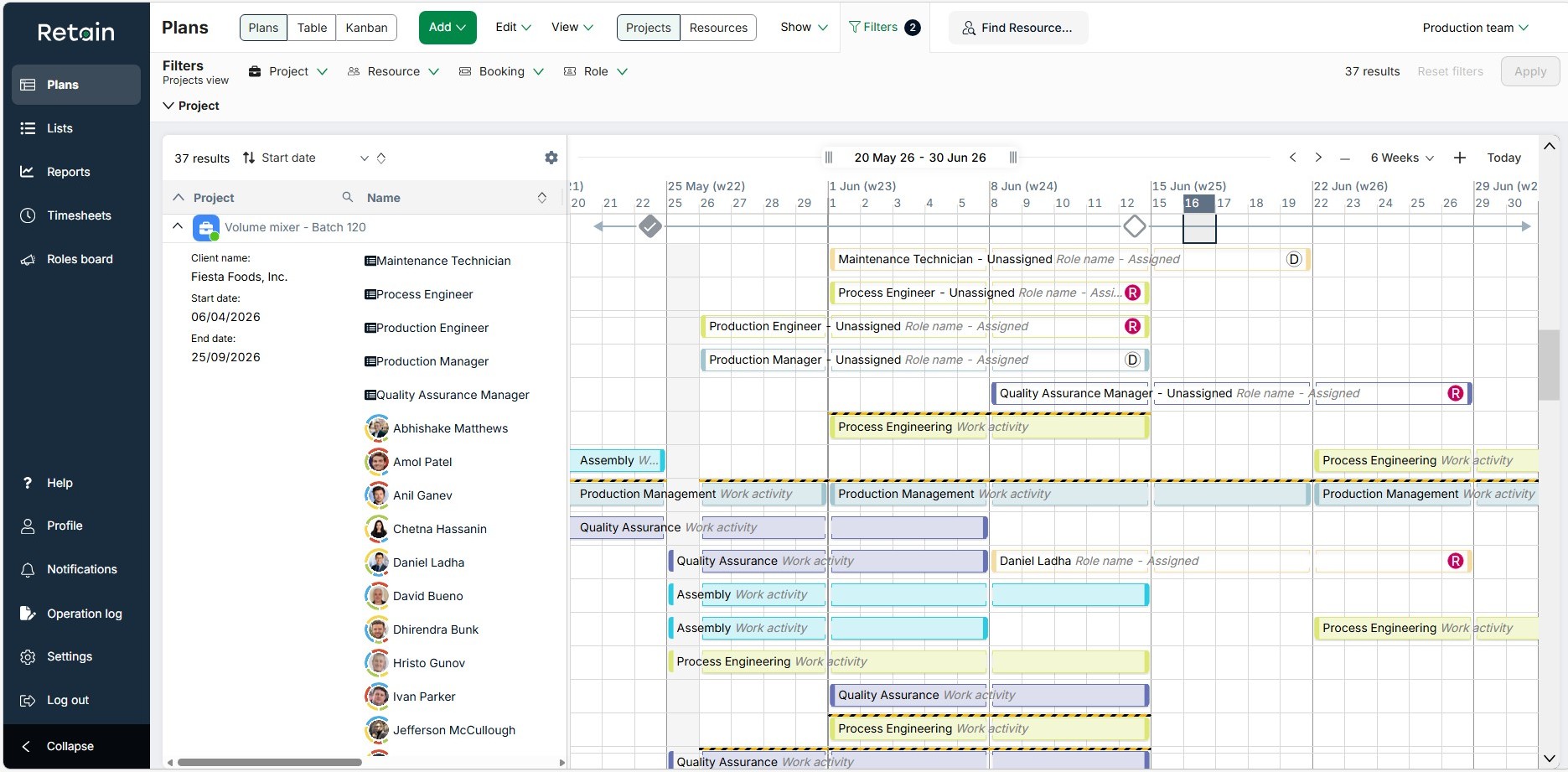
Planning tends to lose value when it sits separately from day to day work. If updates happen after things have already changed, teams begin to rely on conversations instead of the plan itself. That’s where coordination effort starts to build again.
Keeping planning tied to live projects helps maintain accuracy. Updates happen as work progresses, which means the plan remains something teams can act on without needing to double check it.
#5. Use planning to support commercial decisions
When planning becomes reliable, it starts to support decisions that go beyond scheduling.
- Can we take on more work?
- Where are we stretched?
- Where is there spare capacity that could be used more effectively?
These decisions affect output and margin directly. They rely on having a view of the business that people trust, without needing to validate it through multiple conversations.
For engineering and manufacturing firms operating with tighter margins, this is where planning starts to contribute to performance in a measurable way.
Why this is hitting engineering and manufacturing firms harder right now
A few years ago, most engineering and manufacturing firms had more room to absorb inefficiency. Projects could run slightly over without it affecting overall output too heavily. Teams could stretch timelines where needed. A certain amount of coordination overhead was expected and largely accepted.
That tolerance has tightened.
Costs are higher across the board. Lead times are under more scrutiny. And customers still expect delivery to stay on track, even when conditions change.
That combination changes how internal planning plays out commercially.
Small delays start to affect how many projects can be completed over a given period. For instance, a project that could have started this month moves out because availability isn’t confirmed in time. A team works overtime to recover lost time on one job, which then affects progress on another. Or a hiring decision gets pushed through to solve a short-term issue, even though capacity exists elsewhere in the business.
Individually, these decisions make sense, but together, they affect output, cost, and how much work the business can deliver profitably.
That’s why more attention is going into planning.
Engineering and manufacturing firms need a better way to plan work
Most engineering and manufacturing firms already have the people they need to deliver more than they think. The challenge is knowing where that capacity actually is, and being able to use it without adding more coordination overhead.
Spreadsheet-driven planning tends to hide that. It spreads information across different places, relies on people to fill in the gaps, and makes it harder to move quickly when priorities change.
When planning becomes easier to rely on, a few things follow quite quickly. Decisions take less time. Work is distributed more evenly. Teams spend less effort adjusting plans and more time progressing them.
I think that’s where the real value sits for engineering and manufacturing firms.
And when margins are tight, that has a direct impact on how much work the business can take on and deliver profitably.
See how engineering and manufacturing firms are improving planning with Retain
Retain brings projects, people, skills, and capacity into one place, helping teams make faster decisions about what work can be delivered and who is best placed to do it.
👉 Book a demo to see how Retain works.

