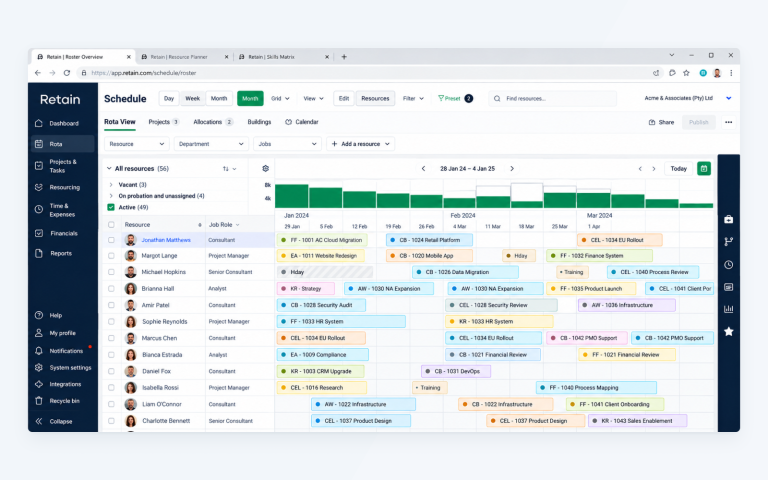
Resource planning used to feel manageable. Today, however, planners are dealing with hundreds, or even thousands, of bookings, overlapping skills, changing priorities, utilisation targets, and concerns about burnout and retention.
In short, resource management has grown way beyond what humans can comfortably manage on their own.
When every decision involves complex trade-offs across skills, utilisation, and team wellbeing, the risks of getting it wrong, from resource burnout and attrition to project delays and missed client expectations, multiply. This is why the role of technology in resource planning needs to change, moving away from simple tools toward resource planning systems that handle the heavy lifting and support confident, deliberate decisions at scale.
📌 This blog covers
- Why modern resource planning has outgrown human capacity
- How complexity and scale reduce confidence in planning decisions
- Where experienced planners start to struggle as variables multiply
- Why visibility alone doesn’t solve the problem
- What role technology should play in supporting planners at scale
About the author
Stewart Pavitt is CTO at Retain, where he leads platform architecture and product development for global professional services firms. He’s worked across architecture, product, and delivery, building systems designed to operate at scale.
In his role, Stewart spends as much time thinking about how people make decisions under pressure as he does about technology itself, particularly where complexity, scale, and human limits collide in resource planning.
The cognitive limit that breaks resource planning at scale

In my role, I spend a lot of time looking at how planning systems behave once they’re under pressure. For instance, what happens as organisations grow, as variables multiply, and as decisions start to carry wider consequences.
On the surface, most firms can see bookings and availability across the business. The data exists, and in many cases it’s accurate. But when one small change can affect dozens of people, multiple projects, and weeks of forward planning, it becomes hard to reason through every implication with confidence.
Spreadsheets tend to make this worse. You move one person, then another, then you start wondering if the first version was better. People stick with names they know. Teams get reused because they’ve worked before. Changes later in the process feel risky, even if there might be a better option sitting there. The goal becomes keeping things stable rather than finding the best possible fit.
From a systems point of view, this is what complexity really does. Planning still works, in the sense that work gets done. But decisions don’t feel solid, and confidence drops. That’s usually the first sign that the problem has grown beyond what people can comfortably manage on their own.
From dozens to thousands: why scale breaks resource planning
One of the biggest changes I’ve seen is what happens when a firm moves from planning for dozens of people to planning for hundreds or thousands.
At smaller scale, you can rely on experience and memory. You know who’s strong at what. You have a feel for who’s overloaded and who has room. Even if the plan isn’t perfect, it’s usually good enough.
As organisations grow, that intuition stops holding up.
There’s a simple idea I come back to a lot when thinking about this. Most people can only hold a small number of things in their heads at any one time. (Roughly four.) Once you push beyond that, focus drops and mistakes creep in.
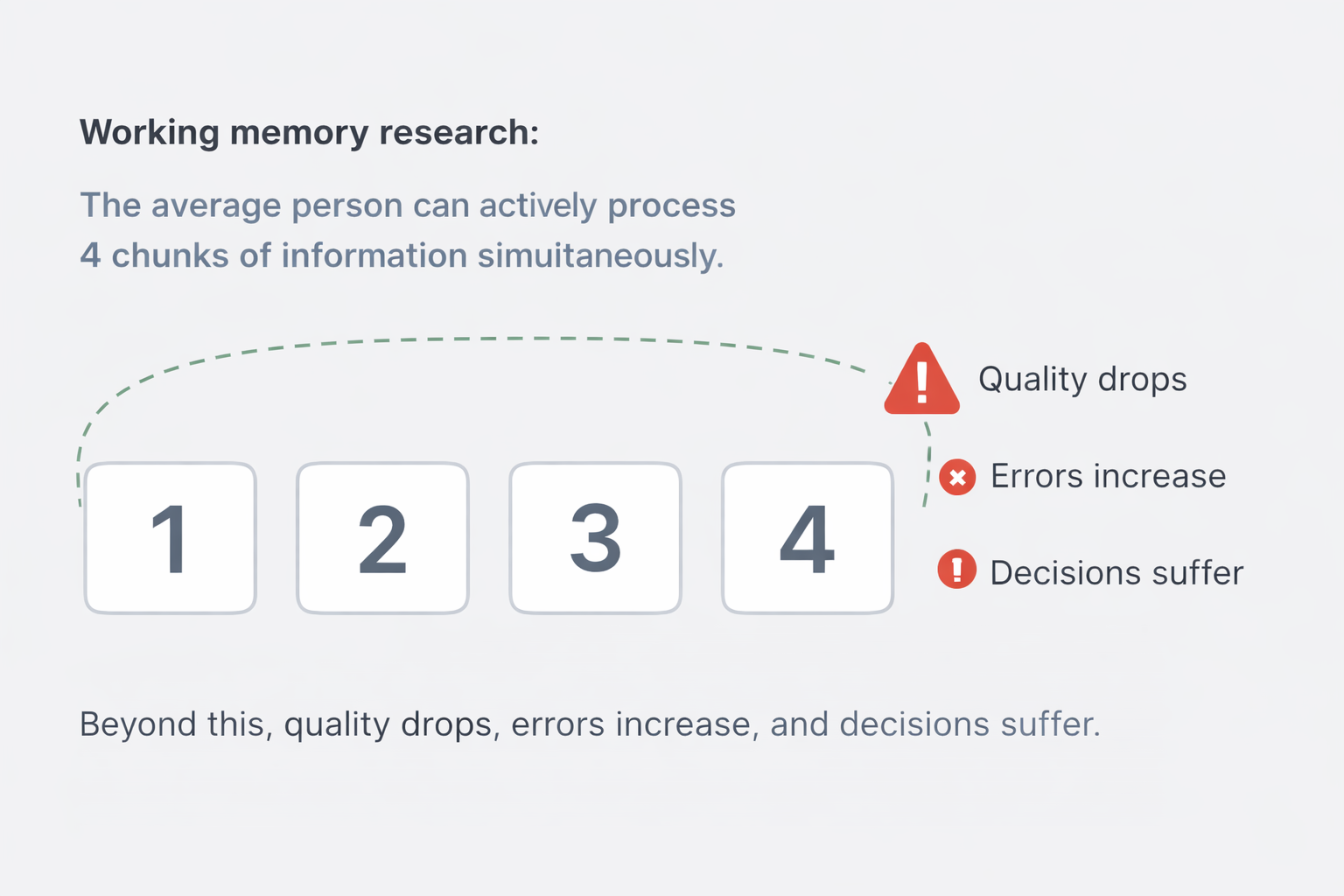
You start out clear on what you’re trying to solve. A few minutes later, you’re jumping between tabs, checking notes, and trying to remember why you made a decision in the first place.
Now apply that to resource planning at scale.
A single decision might involve availability, skills, utilisation, wellbeing, client priority, project deadlines, and future demand. That’s already more than most people can comfortably reason through in one go. Add hundreds of people and thousands of bookings, and the mental load quickly becomes unmanageable.
Where human judgement remains central in resource planning
When I talk about limits, I’m not talking about replacing people or taking judgement out of planning. Some parts of resourcing will always need human input.
Context matters. Relationships matter. Knowing when someone’s had a tough run of projects, or when a client needs a particular style of delivery, isn’t something you want automated away. These are the parts of planning people are genuinely good at.
Where humans struggle is holding everything else together at the same time. Large numbers, complex trade-offs, and “what if” scenarios across hundreds or thousands of decisions.
The change I see happening is away from expecting people to do everything manually, towards systems that handle the heavy lifting and leave judgement where it belongs. Let the system surface good options, highlight trade-offs, and deal with scale. Let people decide what makes sense in context.
When that balance is right, planning feels very different. Less exhausting. More deliberate. People spend their time making decisions rather than trying to keep all the moving parts in their head at once.
The value of resource optimisation
When I talk about optimisation, I’m not talking about replacing planners or handing decisions over to an algorithm. I’m talking about support for the parts of planning that simply don’t scale well in a human head.
At its most useful, optimisation narrows the field. It looks across skills, availability, capacity, experience, and workload, and brings strong options to the surface. That way, people aren’t starting from a blank page or relying on memory alone.
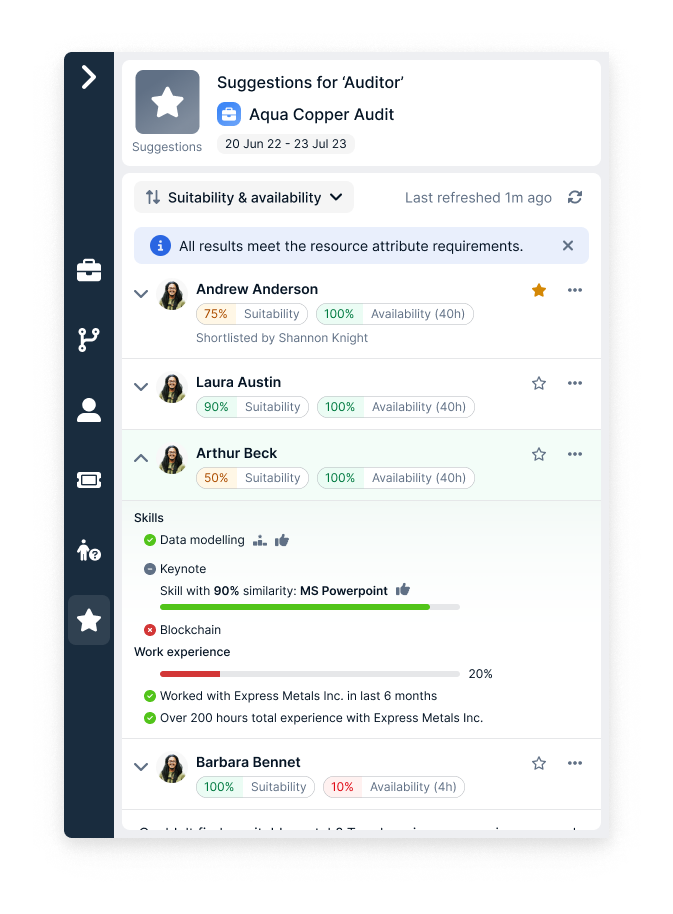
[Retain surfaces strong options instead of asking planners to search manually.]
This kind of view does a lot of heavy lifting. You can see why someone is a good fit, how available they are, and where the trade-offs sit, without having to piece that together yourself. The decision still belongs to the person. The system just makes the reasoning clearer.
Another area where this really helps is skills. Once skills are structured and visible, they stop being something people have to remember or chase down.
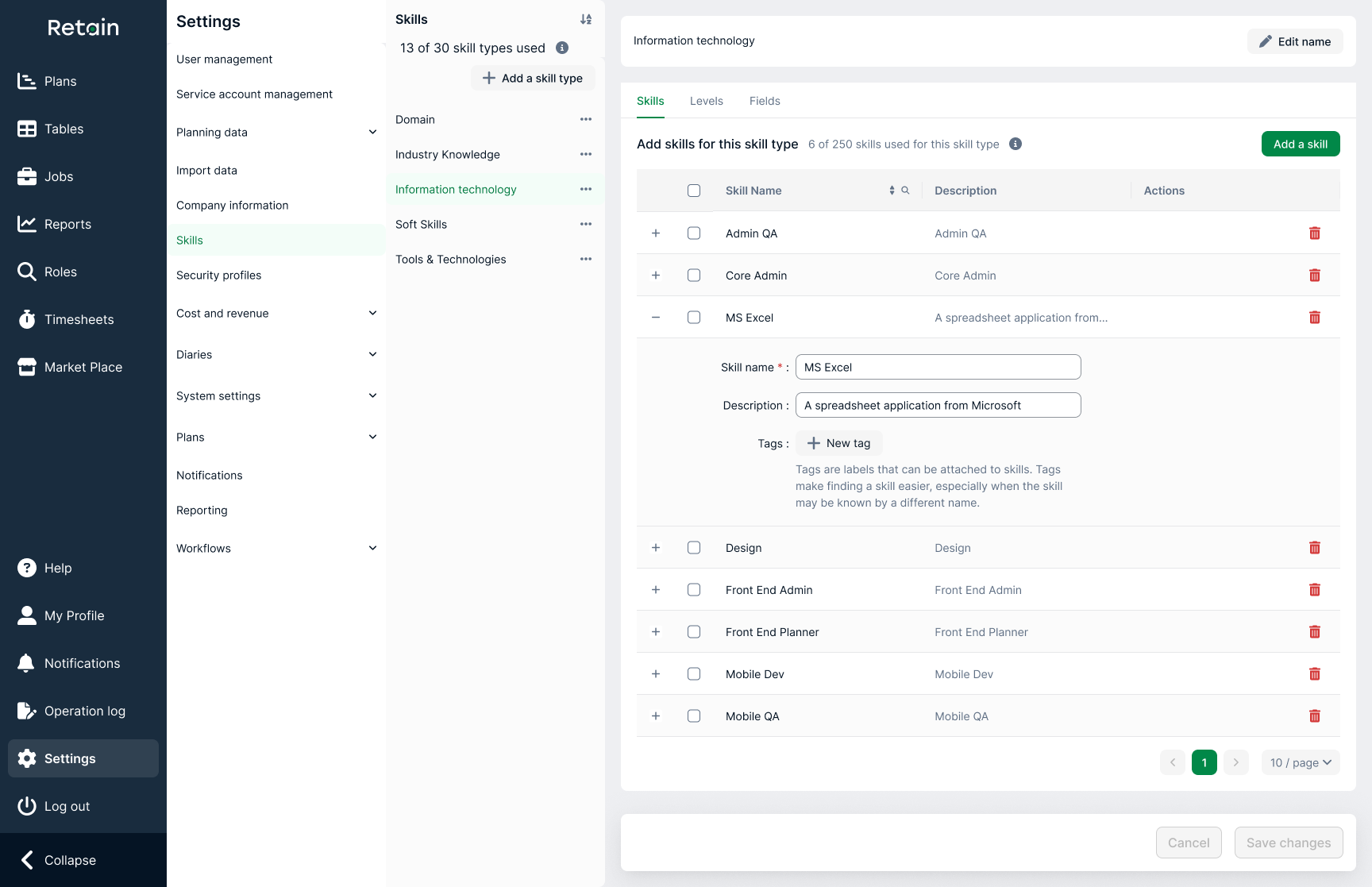
(Turning skills into something the system can work with, not something people have to recall.)
That structure means planning is based on what people can actually do, how recently they’ve done it, and how those skills connect to the work ahead.
Finally, when all of this comes together, you start to see the impact at a higher level.
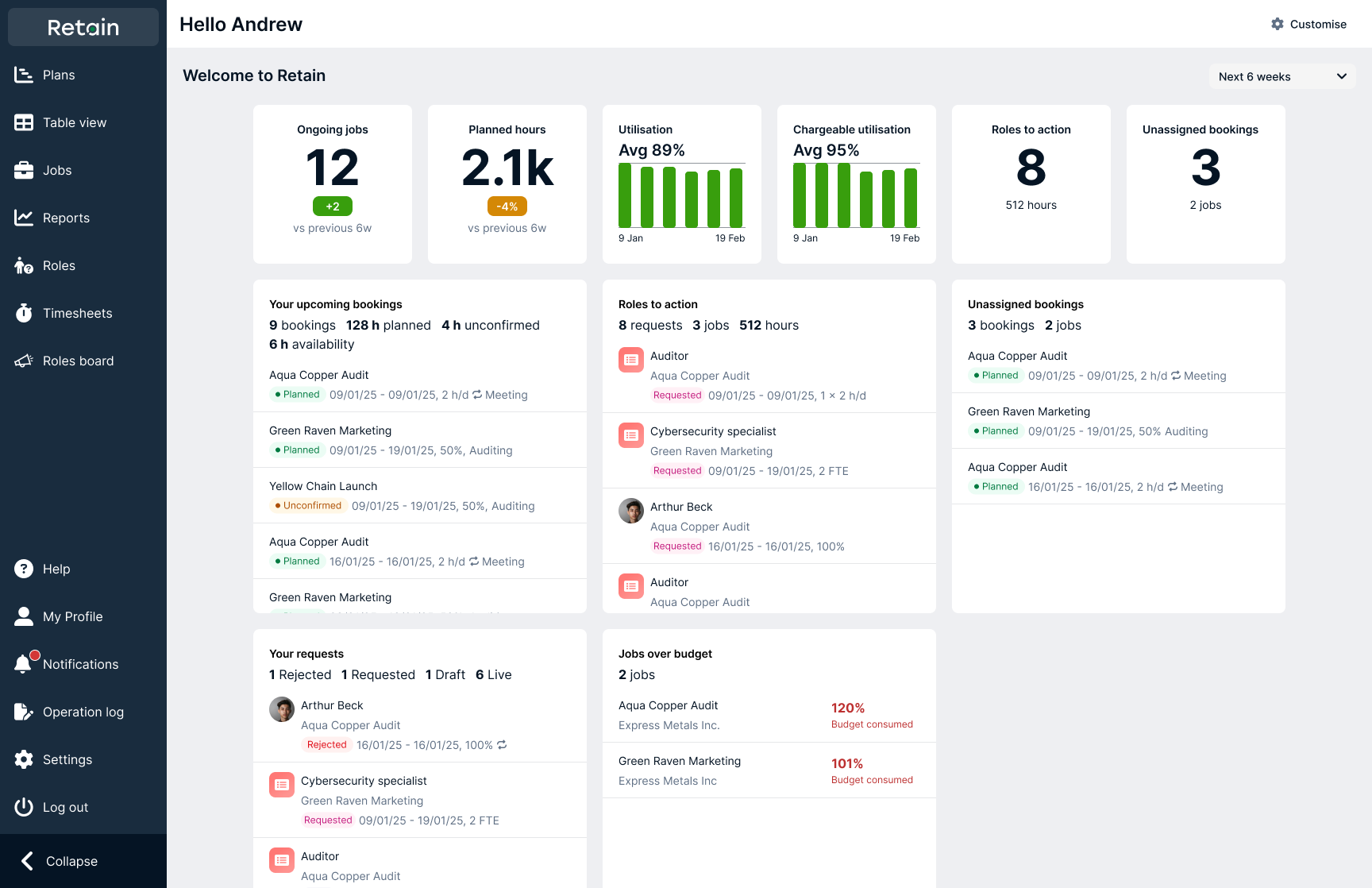
(Less time checking plans, more time acting on what matters.)
The value here isn’t speed for its own sake. It’s confidence. Fewer late changes. Fewer decisions revisited. And a clearer sense that the plan you’re working with is grounded, not fragile.
What comes next for resource planning
What stands out to me is how much we still expect people to carry on their own. As organisations grow, the planning problem grows with them, yet the expectation often stays the same. More effort, more checking, more experience layered on top.
There’s a point where that stops being realistic.
As complexity increases, the role people play in planning needs to change naturally. Less time spent trying to keep everything straight. More time spent making decisions, applying judgement, and dealing with the things that genuinely need context and experience.
The organisations that handle this well tend to recognise what’s happening early. They stop relying on manual workarounds and start building support into the system itself.
When planning is properly supported, it feels calmer. Decisions take less energy. Fewer things need revisiting. Confidence improves, even as the environment stays complex.
That’s where resource planning is heading. People remain central, but they’re no longer expected to manage growing complexity on their own.
If this feels familiar, it’s worth taking a closer look at how your current planning approach is coping with scale. Tools should reduce the mental load, not add to it.
If you’d like to see how Retain supports planners with complexity, you can explore it here.
Our editorial process
Written from interviews with resource managers in IT consulting firms, alongside anonymised patterns from Retain customer data. Direct quotes are used with permission and lightly edited for length.
Reviewed for accuracy by Retain’s resource management practice leads before publication. Claims about outcomes are checked against source data or removed.
The summary at the top of this page is generated from the article text. The article itself is written and edited by people. AI is not used to draft claims, quotes or data.
Spotted something wrong? Email editorial@retaininternational.com and we will correct it, noting the change at the foot of the article.