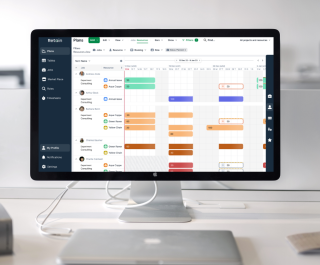
Resource management is far more human than it appears on a schedule or spreadsheet. Every decision involves interpreting people, balancing competing needs, and keeping projects moving without losing sight of development or wellbeing.
Resource managers carry a level of judgement that most systems don’t account for. They’re matching strengths to opportunities, managing changing timelines, and protecting teams from overload, often with tools that only show availability.
If systems can’t reflect the reality of the role, everything becomes heavier and harder to sustain. Conversely, when the tools match the complexity, the invisible work becomes more manageable, more accurate, and far better recognised.
This blog looks at that gap and why resource managers deserve systems built for the real job, not the surface-level version.
The balancing acts that happen every day

Once you look past the schedules, resource management becomes a series of constant trade-offs. Every choice pulls in more than one direction, and that’s where the real complexity sits.
To start with, there’s the tension between client expectations and team capacity. Clients want speed and certainty. Teams need headroom to do good work.
In addition, utilisation targets sit alongside development needs. You’re trying to keep projects staffed without closing the door on stretch work, training, or progression. One overly efficient decision today can limit capability tomorrow.
Meanwhile, project conditions change all the time. Timelines move, scopes expand, and people become unavailable with little notice. As a result, resource managers spend a surprising amount of their week reshaping plans just to keep delivery stable.
On top of this, there’s the human side: wellbeing, chemistry, working styles, and personal commitments.
Taken together, these moving parts explain why resource management is anything but administrative. It’s a practice built on awareness, context, and constant recalibration. And it works best when the system around it supports that reality.
Why most systems fall short in practice

Even though resource managers deal with nuance every day, many of the tools they rely on treat the job as a scheduling exercise. As a result, things rarely line up.
To begin with, most platforms focus on availability. While useful, it quickly becomes limiting when you also need to understand skills, certifications, recent experience, or team dynamics. Without that context, the same people get booked repeatedly simply because they’re visible.
Furthermore, critical information often lives in separate places with HR systems for skills, spreadsheets for qualifications, and emails for client requirements. This forces resource managers to rebuild the picture themselves, which slows decisions and increases the likelihood of errors.
In addition, manual checks create drag. Every time someone has to confirm a credential, chase a project lead, or double-check a past engagement, the process stalls. Over time, these small delays compound.
Consequently, even strong resource managers spend more time gathering information than using it. The work becomes reactive, the pressure increases, and decisions are made with partial visibility.
This is the gap modern resource planning systems need to close: giving people the data they need, in one place, so judgement can move faster and with more confidence.
When systems don’t reflect the work, the work gets harder
When the tools don’t match the reality of resource management, the friction shows up everywhere.
For starters, decisions slow down. Resource managers spend time piecing together information that should already be connected. As a result, allocations take longer, and opportunities to improve team balance slip by.
In addition, gaps in visibility make planning feel riskier. Without a clear view of skills, workload, or upcoming constraints, every choice relies on memory or educated guesses. Over time, this leads to rework, last-minute reshuffles, and rising pressure on the people doing the planning.
Meanwhile, teams feel the downstream effects. Some individuals become overbooked because their strengths are well known, while others stay underutilised because their capability isn’t surfaced anywhere. This creates imbalance, frustration, and missed development moments that could have strengthened your firm’s capability.
Consequently, the emotional load on resource managers grows. They’re still expected to keep projects moving, protect wellbeing, and maintain quality, but they’re doing it without the foundation they need.
This is why system design matters. When platforms don’t reflect the depth of the role, the work becomes heavier than it needs to be. When they do, everything else, from planning to delivery, becomes more sustainable.
What changes when the system starts with people
When systems are designed around how resource managers actually work, the dynamic quickly changes. Instead of assembling information from multiple places, the context is already there.
To begin with, skills become visible and usable. Resource managers can see who has done what, how recently, and in what setting. That makes it easier to match people to work based on capability rather than familiarity.
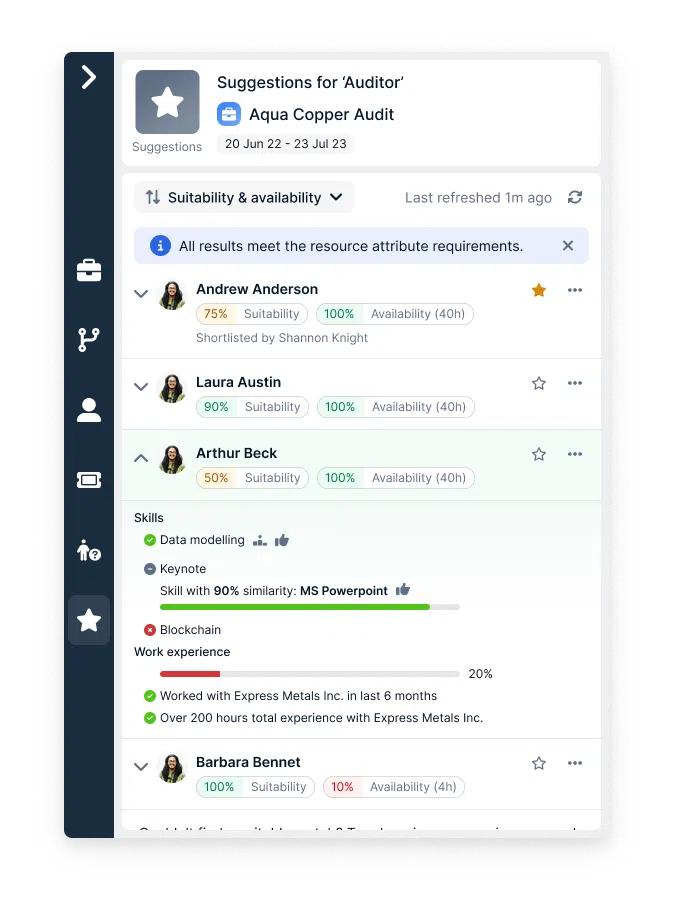
At the same time, certifications and role requirements sit directly alongside planning decisions. This reduces manual checks and gives greater confidence that teams meet both client and regulatory expectations without slowing the process.
In addition, when project history and skill growth are connected, it becomes possible to plan work that supports progression as well as delivery. Stretch opportunities are easier to spot, and development becomes part of everyday planning.
As a result, judgement improves. Decisions are faster, more consistent, and easier to explain. Resource managers still apply experience and intuition, but they’re doing so with far better support.
When the system reflects the reality of the role, the invisible work becomes lighter. Planning feels more intentional, teams feel better balanced, and delivery becomes easier to sustain.
Supporting judgement instead of replacing it
Good resource management relies on experience, context, and an understanding of how people work best together. For that reason, the role can’t be reduced to automated decisions.
Instead, the value of better systems sits in what they remove. When routine checks, fragmented data, and manual coordination disappear, resource managers gain back time and headspace. That space is where judgement does its best work.
At the same time, well-designed platforms make decision-making clearer. They show why a match works, highlight constraints early, and surface alternatives when plans change. This creates confidence, both for the person making the decision and for those affected by it.
As a result, technology becomes an enabler rather than a gatekeeper. Resource managers stay in control, using data to inform choices rather than override them.
When judgement is supported in this way, planning becomes more consistent, more defensible, and easier to scale, without losing the human insight that makes it effective in the first place.
Why this matters now

There are huge demands placed on professional services firms. Client expectations are always getting higher, regulatory requirements are tighter, and the margin for error is narrower. At the same time, skills shortages and retention pressures are reshaping how teams need to be planned and supported.
As a result, the resource manager’s role has expanded. The job now sits at the intersection of delivery, risk, and people strategy. Decisions made in planning ripple out into client outcomes, team wellbeing, and long-term capability.
Meanwhile, the complexity isn’t slowing down. Project work is more specialised, teams are more distributed, and development needs are harder to balance against utilisation. Without better visibility, this complexity becomes difficult to manage consistently.
For this reason, systems supporting resource management matter more than ever. When they reflect how the work actually happens, firms gain stability, clarity, and resilience. When they don’t, the pressure concentrates on individuals.
The reality is simple: the work has evolved. The tools need to keep pace.
In summary
Resource managers have always understood the human side of the job. They know how to read teams, spot potential, and balance competing priorities in ways no spreadsheet ever could.
What’s changed is the level of complexity they’re expected to manage. As firms grow and work becomes more specialised, relying on memory, workarounds, and disconnected tools simply isn’t sustainable.
When systems reflect the real nature of resource management, the invisible work becomes lighter and more consistent. Decisions are easier to make, teams are better supported, and capability is built with intention rather than chance.
If resource management in your organisation feels heavier than it should, it’s worth seeing what changes when the system reflects the real work behind the plan. Book a demo of Retain to see how skills-led, connected resource planning supports better decisions, stronger teams, and more sustainable delivery.
Our editorial process
Written from interviews with resource managers in IT consulting firms, alongside anonymised patterns from Retain customer data. Direct quotes are used with permission and lightly edited for length.
Reviewed for accuracy by Retain’s resource management practice leads before publication. Claims about outcomes are checked against source data or removed.
The summary at the top of this page is generated from the article text. The article itself is written and edited by people. AI is not used to draft claims, quotes or data.
Spotted something wrong? Email editorial@retaininternational.com and we will correct it, noting the change at the foot of the article.