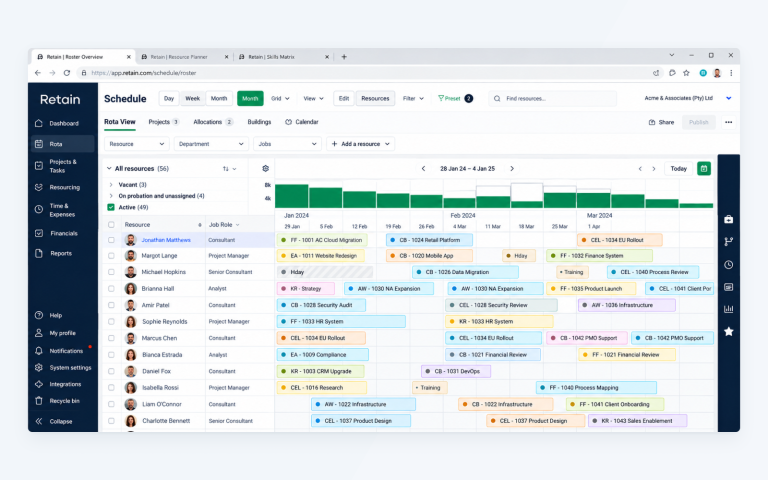
Everyone’s talking about the consulting skills shortage. Yet many firms already have the expertise they’re searching for. (They just can’t see it.)
Why? Because skills data is scattered across offices, service lines, HR systems, old CVs, spreadsheets, and the memories of a handful of partners and resource managers. When a new engagement comes in, finding the right consultant becomes a race against the clock. The same people get booked again and again, while equally capable colleagues stay hidden.
This is an expensive problem: Slow staffing delays engagements, hidden expertise means missed opportunities, and high performers burn out. All while valuable talent sits underused, and every missed match chips away at utilisation, profitability, and the client experience.
In this article, we’ll look at:
- Why skills shortages have become such a challenge for consulting firms,
- Why many businesses already have more expertise than they realise,
- And how better visibility into skills can help improve utilisation, protect profitability, and build stronger project teams.
Skills shortages in consulting firms are a visibility problem
As we briefly touched on, as consulting businesses grow, skills become scattered across HR systems, spreadsheets, project records and the knowledge of a handful of partners or resource managers.
Essentially, valuable expertise becomes harder to find just when firms need it most.
If any of these sound familiar, you’re not alone:
- Consultants are staffed because someone knows them personally.
- The same specialists are booked repeatedly while others are overlooked.
- Project teams take days to assemble because information is spread across multiple systems.
- Resource managers spend hours asking around instead of searching with confidence.
- New opportunities are delayed because nobody can quickly identify the right expertise
Recent conversations with consulting firms revealed exactly this challenge. Many have skills data somewhere in the business, but few can use it effectively when staffing client work.
Every one of these small frustrations has a commercial impact. Engagements are slower to mobilise, utilisation suffers, experienced consultants become overloaded, and valuable expertise remains hidden across the organisation.
That’s why leading consulting firms are putting skills visibility at the centre of resource planning. When you can search by capability, experience, proficiency, and availability in one place, building the right project team becomes much faster and far more consistent
The business impact of poor skills visibility in consulting firms
Every delayed staffing decision has a cost.
Sometimes it’s obvious, like turning down an engagement because you can’t find the right expertise quickly enough. More often, the impact builds over time through lower utilisation, slower delivery, and consultants spending too much time searching for answers instead of delivering value.
The consulting firms we spoke to described the same underlying challenge. Hidden skills make it harder to respond to new opportunities, forecast demand, and deploy consultants with confidence. In many cases, firms were missing revenue opportunities because they simply couldn’t see all of the capability already available across the business.
How poor skills visibility affects business performance:
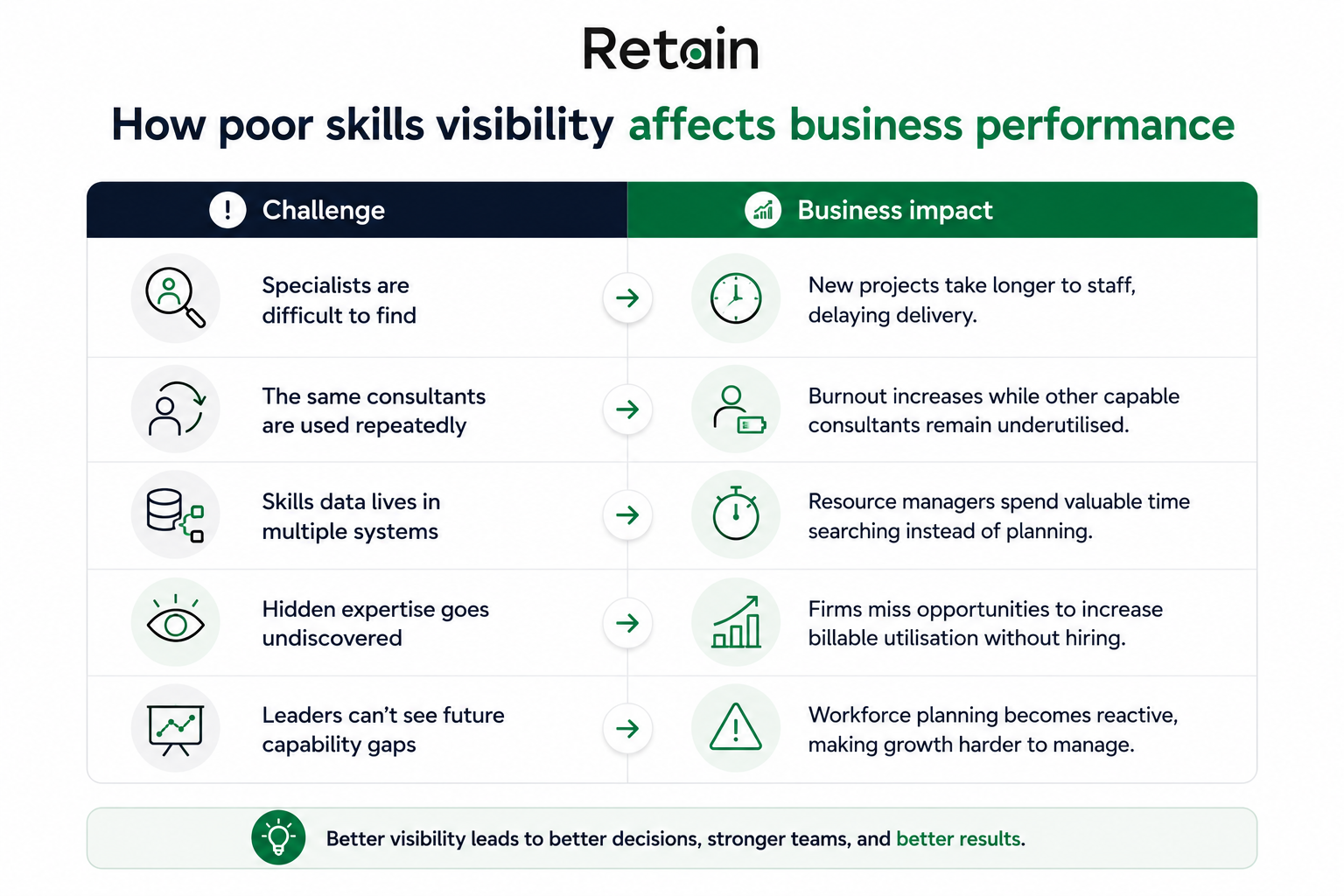
Of course, these challenges don’t happen in isolation. One delayed staffing decision creates pressure somewhere else. High performers become overloaded, resource managers spend longer coordinating, and clients wait longer for teams to be assembled.
That’s why the conversation around consulting workforce planning is changing. Leading firms are looking beyond availability and asking a much more valuable question:
Do we have the skills to deliver this work, and can we find them quickly enough to win it?
Why spreadsheets can’t support modern consulting workforce planning
Most consulting firms didn’t set out to build a fragmented resource planning process. It usually happens gradually.
A spreadsheet was added to track availability, HR introduced a skills database, CRM held the sales pipeline, and project history lived somewhere else. Before long, nobody had a complete picture of the business.
Where skills become hidden:
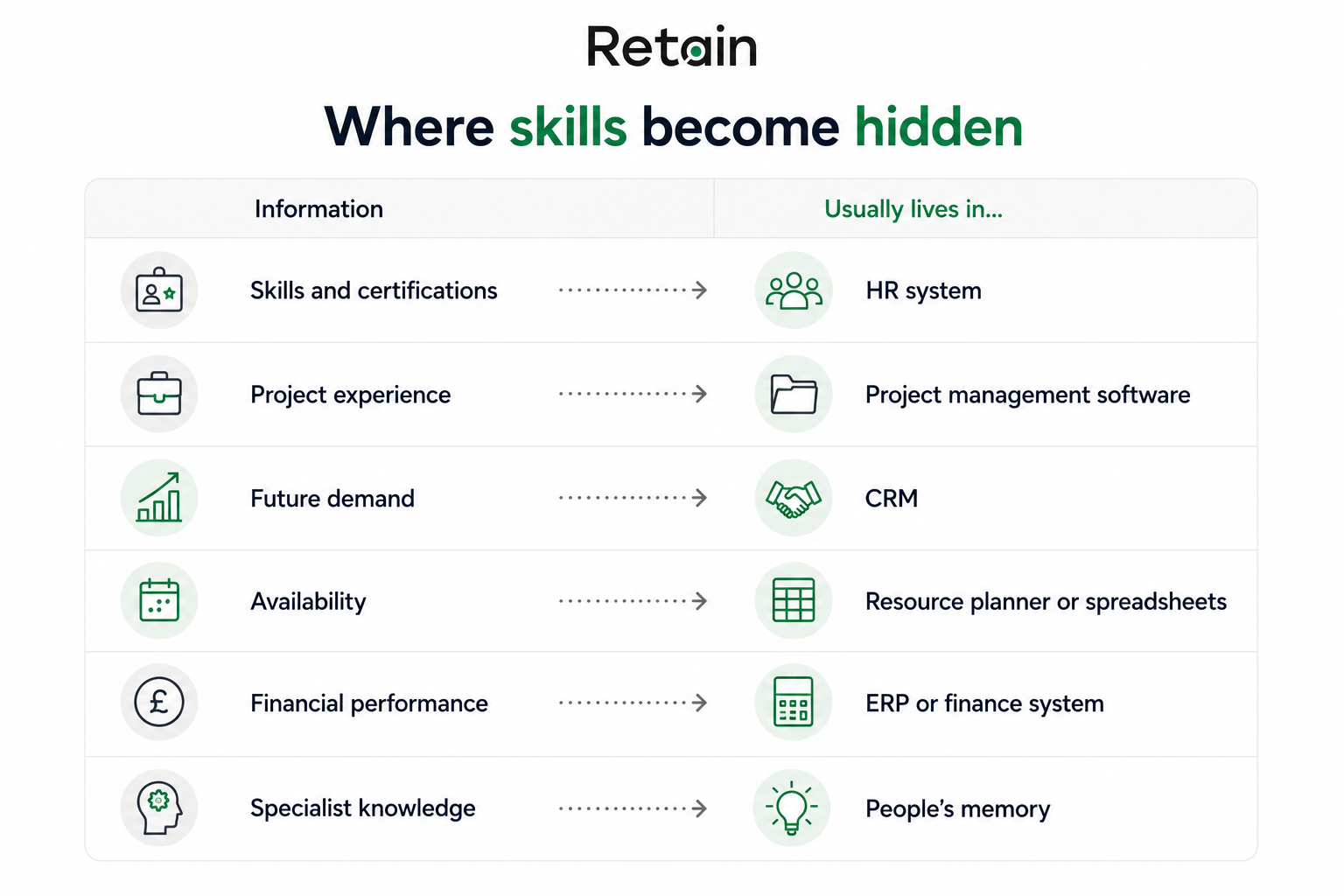
Individually, each system does its job. Together, they leave resource managers piecing together information before they can answer a simple question:
Who’s the best person for this engagement?
That’s one of the biggest themes we’ve seen from conversations with consulting firms. The challenge is connecting people, projects, pipeline, and skills so decisions can be made from one reliable view of the business, like this:
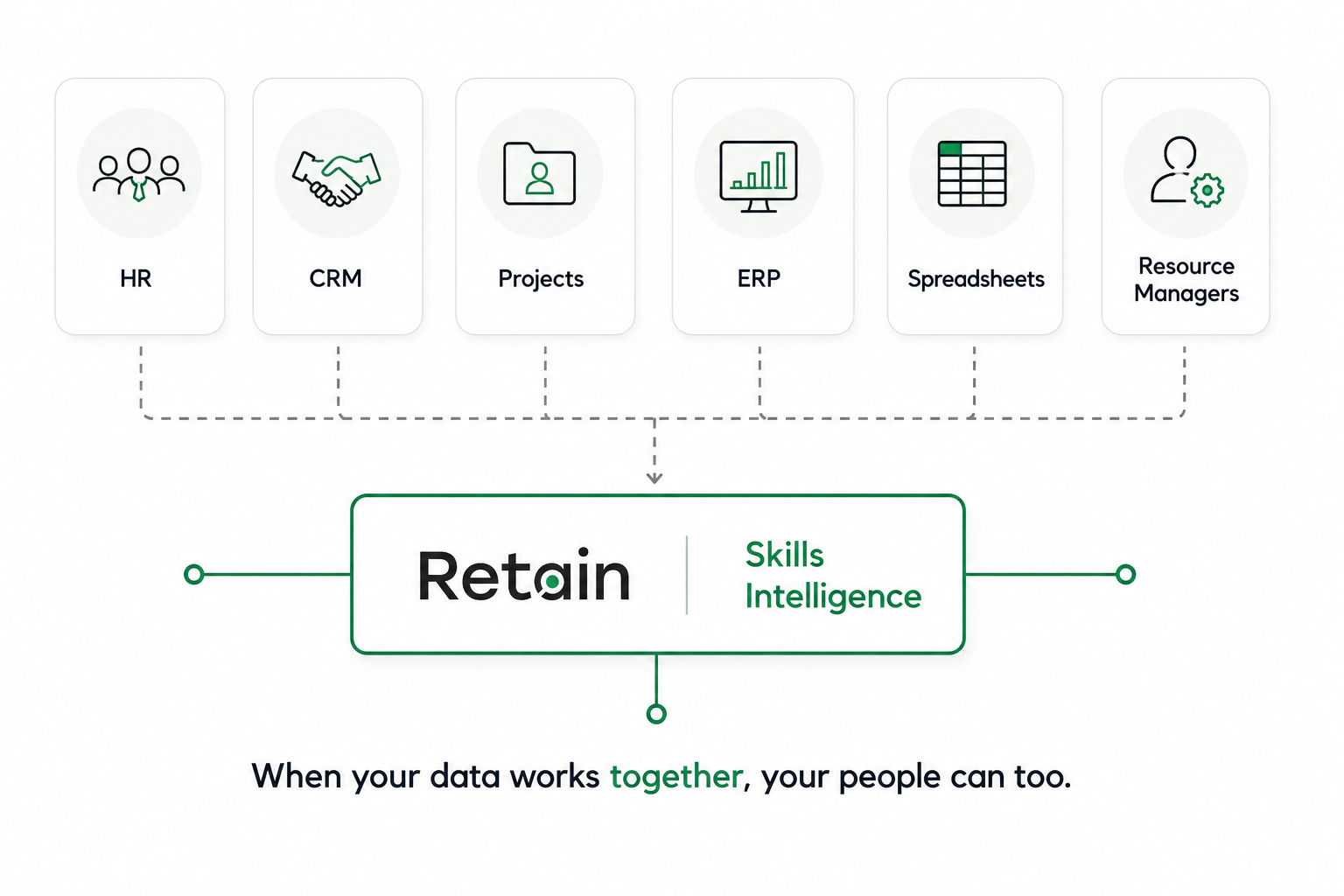
As consulting firms continue to grow, this connected view is incredibly valuable. Resource managers can search across the whole organisation instead of individual teams. Leaders can see future capacity alongside future demand. And consultants spend less time waiting to be assigned to work that’s already in the pipeline.
What skills intelligence looks like in modern consulting workforce planning
Once firms realise they have a visibility problem, the next question is obvious.
How do you make thousands of skills searchable, reliable and useful when a new project lands?
The answer is skills intelligence.
Instead of treating skills as static information sitting in an HR system, skills intelligence connects capability to the work people have actually delivered. It gives resource managers and business leaders a live view of who can do what, where experience is, and how those skills align with future demand.
Four building blocks of skills intelligence
1. A common language for skills
The same capability is often described in different ways across departments. A standardised skills taxonomy creates consistency, making expertise much easier to search and compare.
2. Skills connected to real project experience
Knowing someone lists a skill is useful. Knowing they’ve used it recently on similar client work gives resource managers far greater confidence when building project teams.
3. Intelligent matching
Modern workforce planning looks beyond job titles and availability. It considers skills, proficiency, experience, workload and adjacent capabilities to recommend the strongest candidates for each engagement.
4. Real-time visibility across the business
Instead of searching team by team, firms can see capability across the entire organisation, making it much easier to uncover hidden expertise and respond quickly when new opportunities arise.
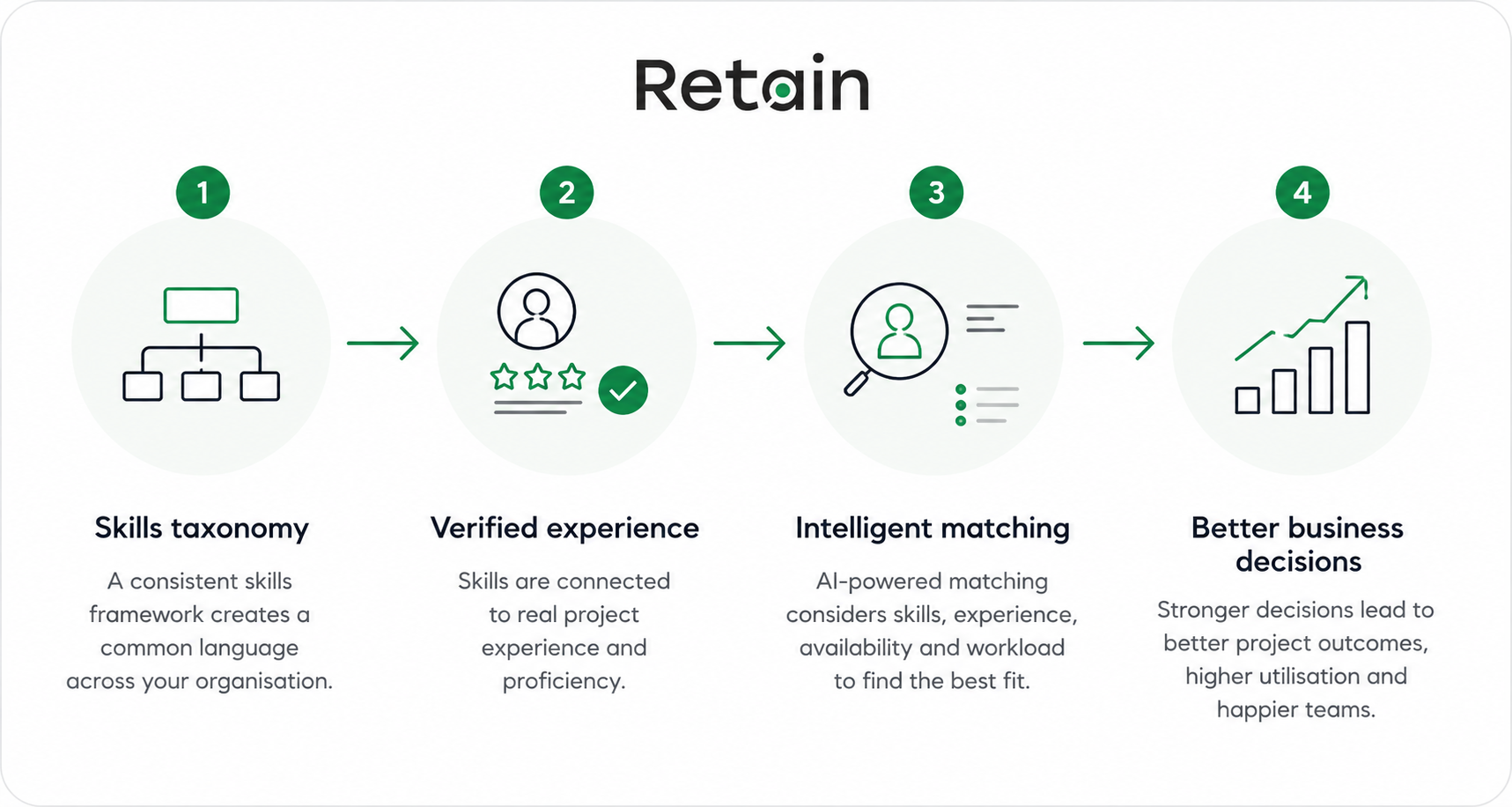
This is even more key as consulting engagements become more specialised. Our conversations with consulting firms found that many already hold large amounts of skills data, but struggle to turn it into meaningful workforce intelligence that supports faster, more confident decision-making.
When skills become intelligence instead of information, resource planning changes too. Firms stop relying on memory and spreadsheets. They start making faster staffing decisions, uncovering hidden capability, and putting the right consultants in front of the right clients with far greater confidence.
How skills intelligence helps consulting firms unlock hidden capacity
Put simply, the goal is to make better decisions about the people you already have. Because when resource managers can see skills, availability, project experience and future demand in one place, they spend less time searching and more time building teams that are set up to succeed.
What changes with skills intelligence?
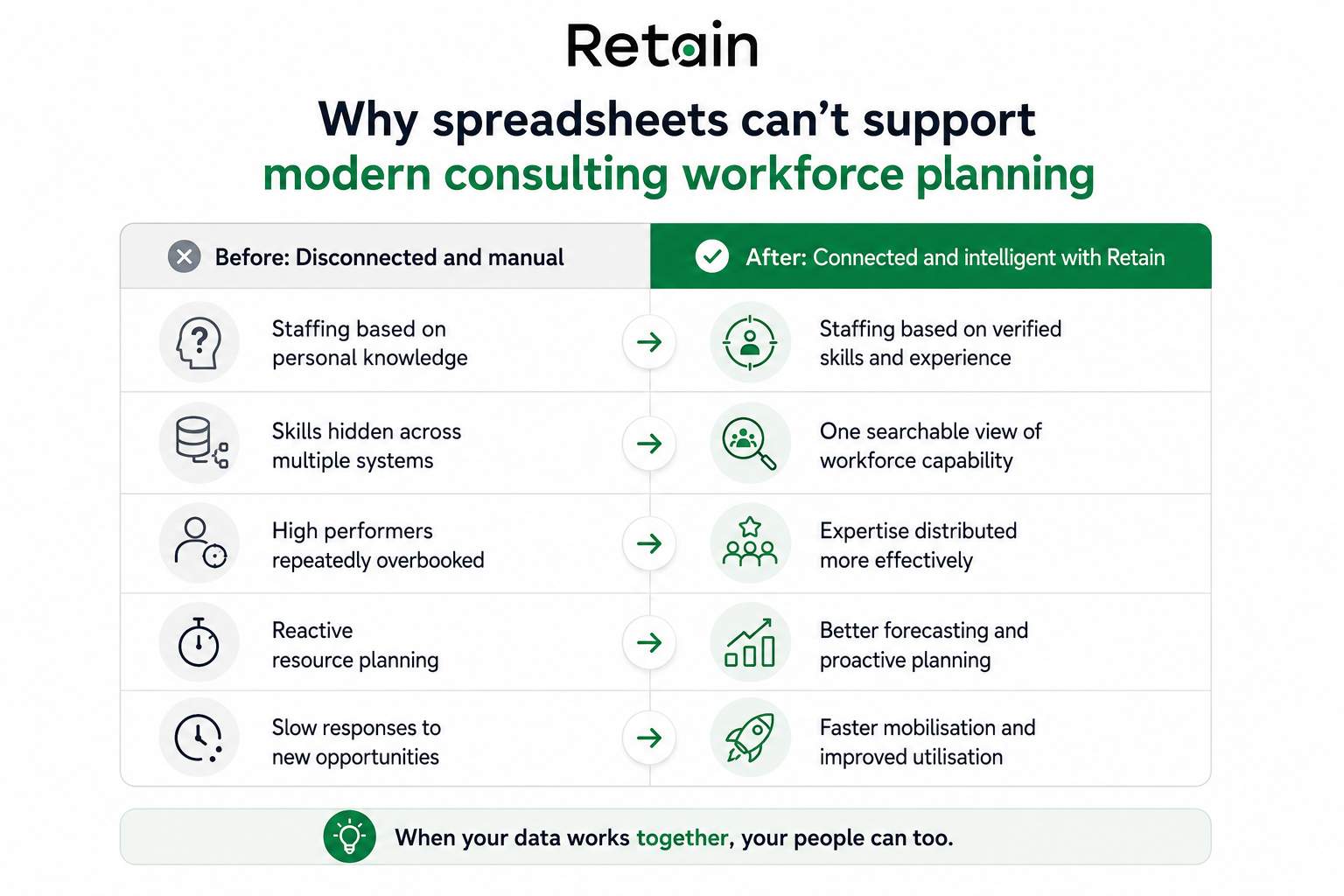
Platforms like Retain Cloud bring those different data sources together into a single view of your consulting workforce. Skills, project history, pipeline, utilisation and availability are connected, giving resource managers the information they need to make confident staffing decisions.
Instead of asking around to find the right consultant, teams can search by capability, proficiency, recent project experience and availability. AI-powered matching then helps rank suitable consultants based on the requirements of each engagement, helping uncover expertise that might otherwise have been overlooked. Retain also supports a standardised Skills+ taxonomy, allowing firms to build a consistent language for capability across the organisation.
The commercial impact
Better visibility into skills creates benefits across the business:
- Engagements are staffed faster.
- Hidden expertise becomes billable work.
- Leaders gain greater confidence in workforce planning.
- Consultants are matched to work that better reflects their strengths and experience.
- Clients benefit from teams with the right mix of capability from day one.
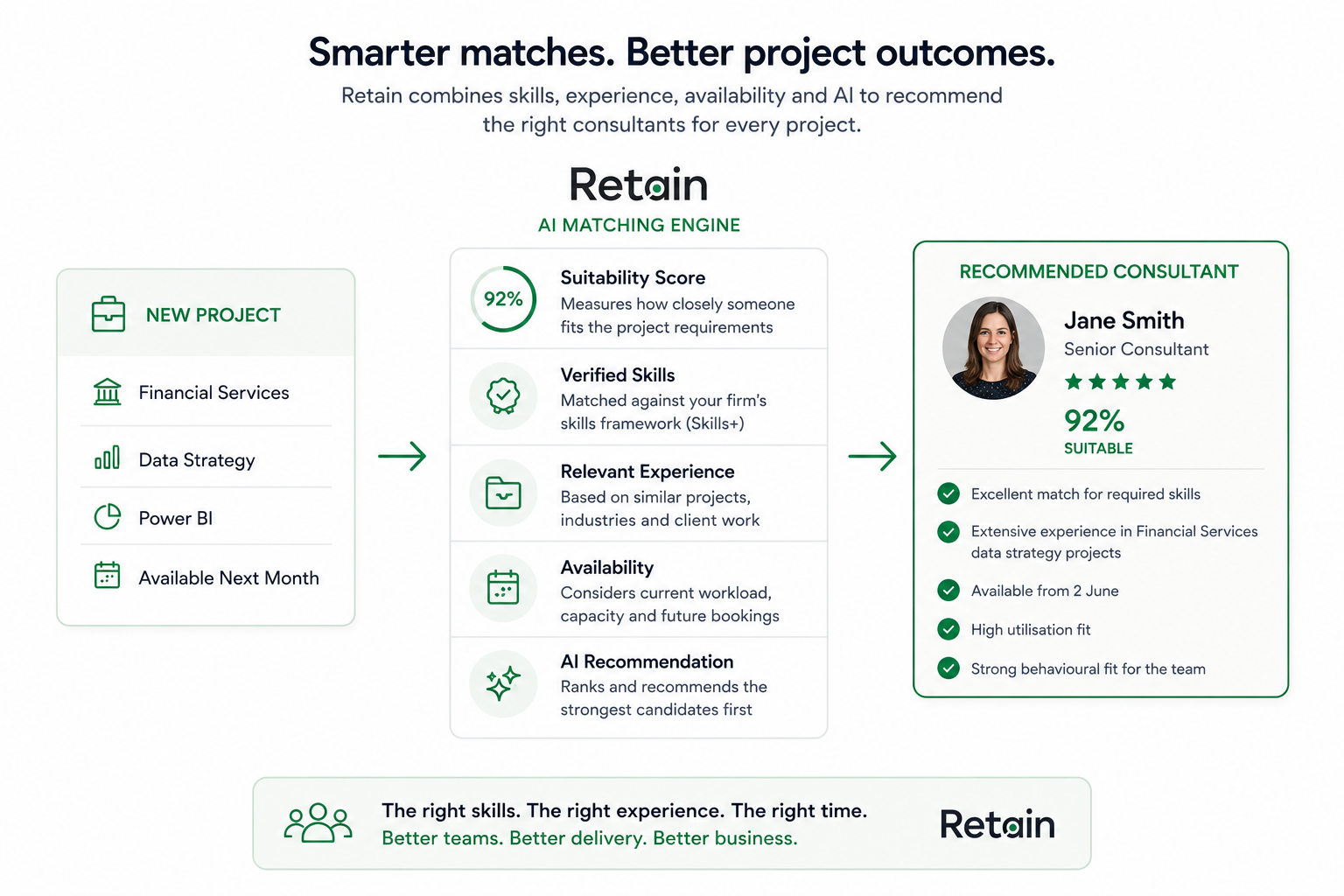
When every staffing decision is backed by real workforce intelligence, consulting firms can improve utilisation, respond to opportunities more quickly, and grow without relying solely on increasing headcount.
Why skills intelligence is becoming a competitive advantage for consulting firms
Skills shortages aren’t going away. But firms with a clear view of their workforce are in a much stronger position to respond. They can identify where genuine capability gaps exist, where existing talent could be redeployed, and where investment in recruitment or development will have the biggest impact.
Key takeaways
✔ Many consulting firms already have valuable expertise hidden across the business.
✔ Better skills visibility leads to better skills intelligence, giving leaders a clearer picture of workforce capability.
✔ Skills intelligence helps firms improve utilisation, mobilise enagements faster, and uncover new revenue opportunities.
✔ Connected workforce planning supports better decisions for resource managers, business leaders and clients alike.
If you’re still relying on spreadsheets, disconnected systems or institutional knowledge to allocate consultants, now is the time to rethink how your workforce is planned.
Retain Cloud helps consulting firms bring skills, projects, capacity and demand together in one intelligent platform, making it easier to uncover hidden capability, improve utilisation and build stronger project teams with confidence.
Ready to see skills intelligence in action? Book a personalised demo to discover how Retain Cloud helps consulting firms unlock the full value of their workforce.
Our editorial process
Written from interviews with resource managers in IT consulting firms, alongside anonymised patterns from Retain customer data. Direct quotes are used with permission and lightly edited for length.
Reviewed for accuracy by Retain’s resource management practice leads before publication. Claims about outcomes are checked against source data or removed.
The summary at the top of this page is generated from the article text. The article itself is written and edited by people. AI is not used to draft claims, quotes or data.
Spotted something wrong? Email editorial@retaininternational.com and we will correct it, noting the change at the foot of the article.