





Every board meeting revolves around data, including financials, sales data, customer data, and operational data.
But there's another dataset climbing the agenda: skills data.
If you can't see the capabilities within your own workforce, you will struggle to answer key questions such as:
🟢 Can we deliver what's in the pipeline?
🟢 Where are our biggest capability risks?
🟢 Do we need to hire, or could we redeploy existing talent?
🟢 Are we investing in the skills the business will need next year?
In this article, we'll explore why skills data has become one of the most valuable assets an organisation can have, and why leading businesses are turning it into competitive advantage.
Why skills data is climbing the boardroom agenda
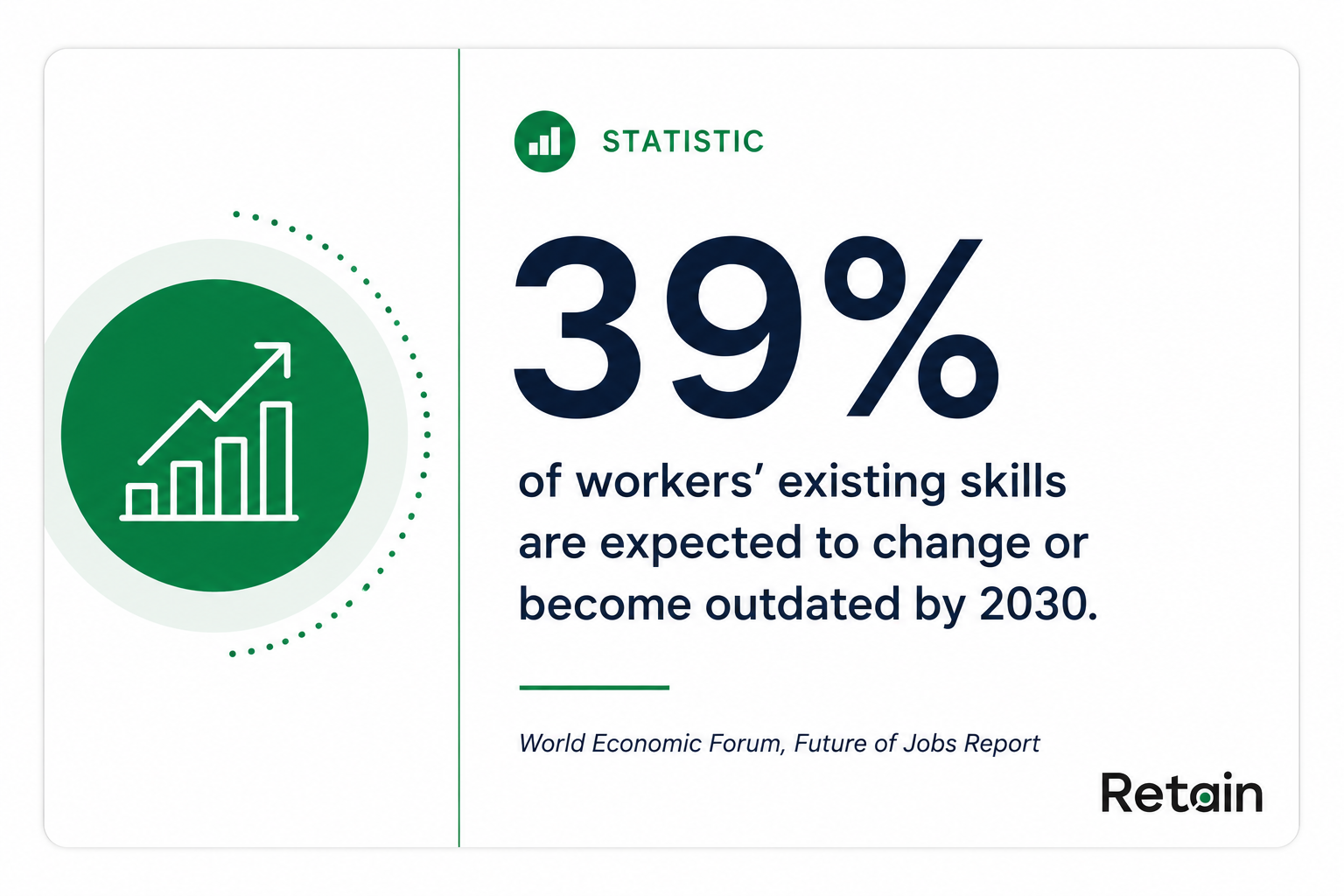
Businesses have always relied on skills, but nowadays, the skills needed for a job have changed a lot.
Take AI, for example and how that’s reshaping roles. Client expectations are changing. And new regulations are creating demand for more specialist expertise. At the same time, competition for talent is pretty fierce, making it harder and more expensive to recruit every time a new capability is needed.
The result? Boards are looking beyond headcount and job titles to understand whether the business has the capabilities needed to deliver its strategy.
What's driving this?
✔️ Skills are changing faster than organisational structures. New capabilities crop up every year, while others lose relevance.
✔️ Growth depends on specialist expertise. Winning new business means proving you have the right people ready to deliver.
✔️ Hiring alone isn't sustainable. Boards want to understand where they can redeploy or develop existing talent before increasing headcount.
✔️ Risk is becoming more visible. If only one or two people hold critical knowledge, that creates operational and commercial exposure.
✔️ Better workforce decisions need better data. Leaders can no longer rely on assumptions or fragmented information when making strategic investment decisions.
This all explains the role of skills data. It helps answer some of the biggest questions facing modern organisations: Can we deliver our growth plans? Where are we exposed? And what capabilities do we need next?
The strategic questions skills data can answer
For many organisations, workforce planning mainly looks at who’s available. On the other hand, leading organisations know the right resource planning can do much more than that.
They want to understand whether they have the capability to deliver tomorrow's strategy, where future risks are emerging, and how existing talent can be used better before investing in new hiring.
That's where skills data becomes a decision-making tool.
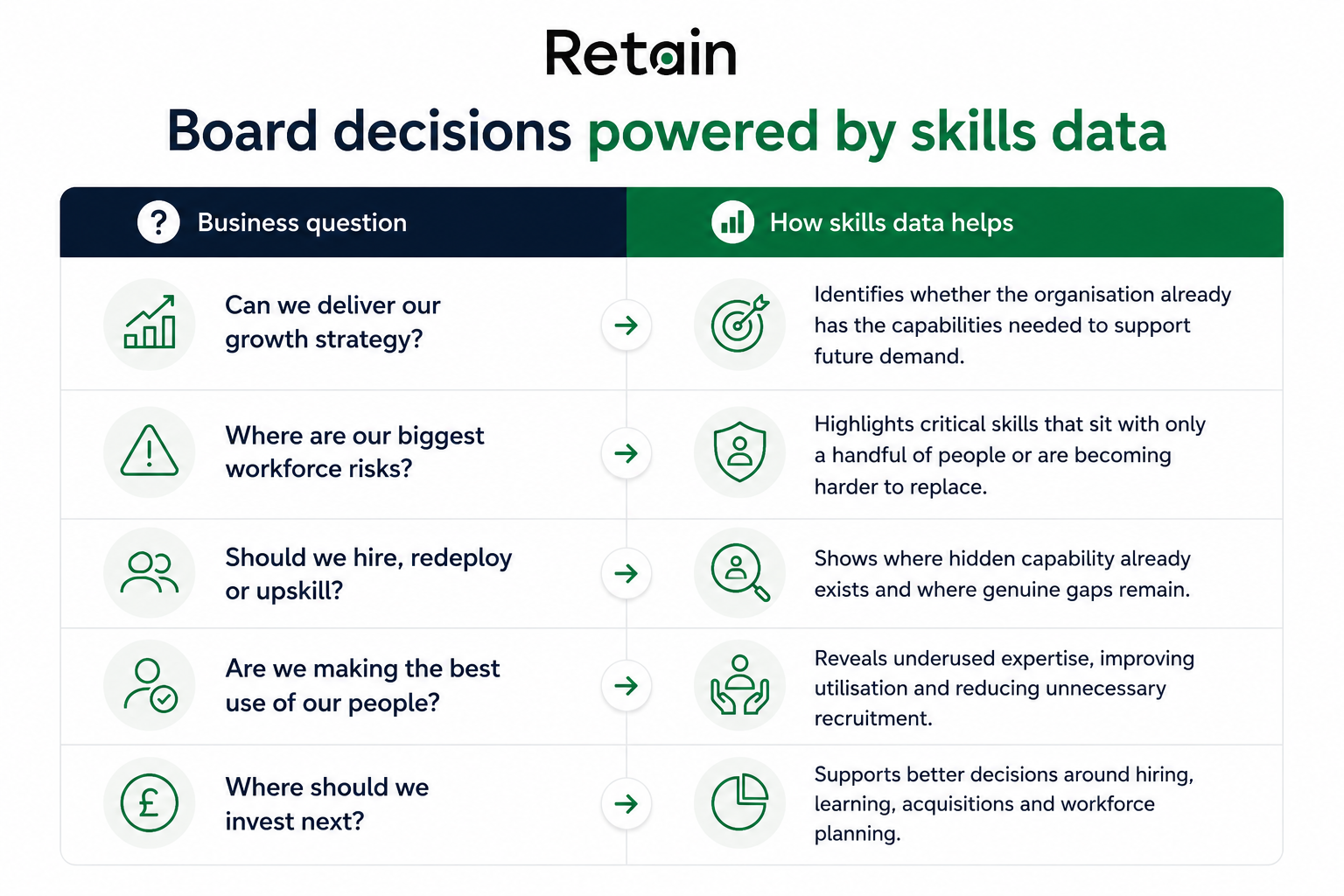
These are decisions leadership teams make every week. And they're far easier to answer when skills data is accurate, connected, and easy to understand.
Compare that to organisations without that visibility, and they tend to recruit for skills they already have, overlook valuable expertise in other teams, or discover capability gaps only after they've started delivering work.
Why most organisations still struggle to use skills data
Here's the irony. Most organisations already have plenty of skills data. It’s already in HR systems, learning platforms, CVs, project records, certification databases, and spreadsheets. Every department holds another piece of the puzzle.
The problem is turning it into something the business can properly use.
What gets in the way?
✔️ Skills are described differently across the business. One team might record "Power BI", another "Business Intelligence", while a third simply writes "Data Analytics."
✔️ Information quickly becomes outdated. People complete projects, earn certifications and develop new expertise, but their profiles rarely keep pace.
✔️ Critical information lives in different systems. Skills, availability, project experience and workforce demand are often managed separately, making it difficult to see the full picture.
✔️ Leaders lack context. Knowing someone has a particular skill is useful. Knowing how recently they've used it, how proficient they are, and whether they're available to deploy is far more valuable.
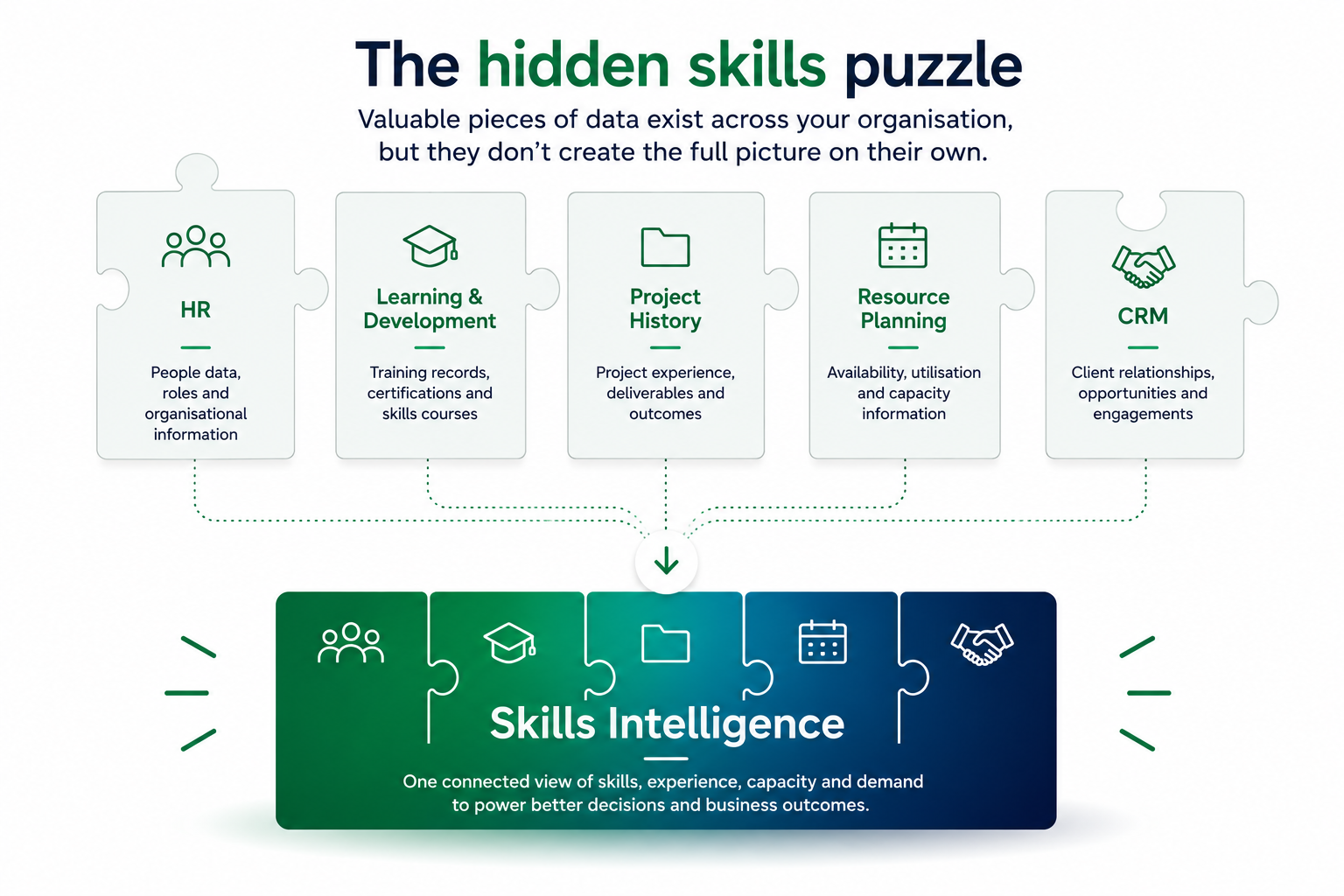
This is why many organisations still rely on personal knowledge when making workforce decisions. Managers remember who delivered a similar project last year. Leaders default to hiring because they can't quickly identify capability that's already inside the business.
As organisations grow, that approach becomes harder to sustain. Decisions take longer, hidden expertise stays hidden, and workforce planning becomes increasingly reactive.
From skills data to skills intelligence
A spreadsheet with skills data might tell you someone has a particular skill. Skills intelligence tells you whether they've used it recently, how proficient they are, what projects they've applied it to, whether they're available, and how well they match future demand.
Here’s a simple breakdown:
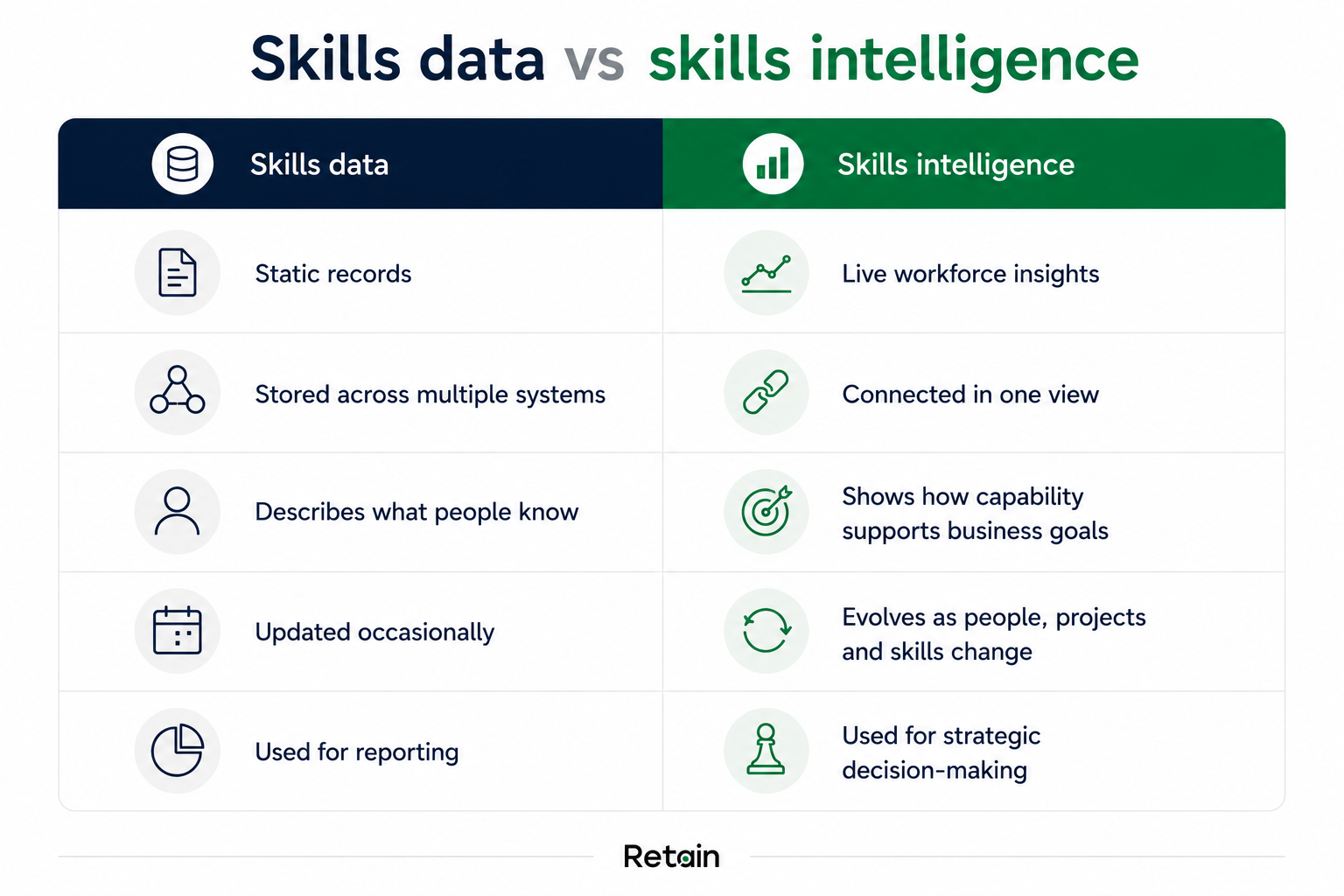
This is where workforce and resource planning start to become far more strategic.
Instead of reacting to immediate staffing requests, leaders can identify emerging capability gaps before they affect delivery. They can uncover expertise that was previously hidden, model different workforce scenarios, and make investment decisions based on evidence rather than assumptions.
The short version: Moving from skills data to skills intelligence gives boards and business leaders the confidence to make decisions about growth, investment and transformation with a much clearer understanding of the capabilities already inside the organisation.
What does skills intelligence look like when done well?
For skills intelligence to support board-level decisions, it needs to connect people, projects and business priorities into one complete picture.
That's where modern workforce planning platforms - like Retain - are changing the conversation.
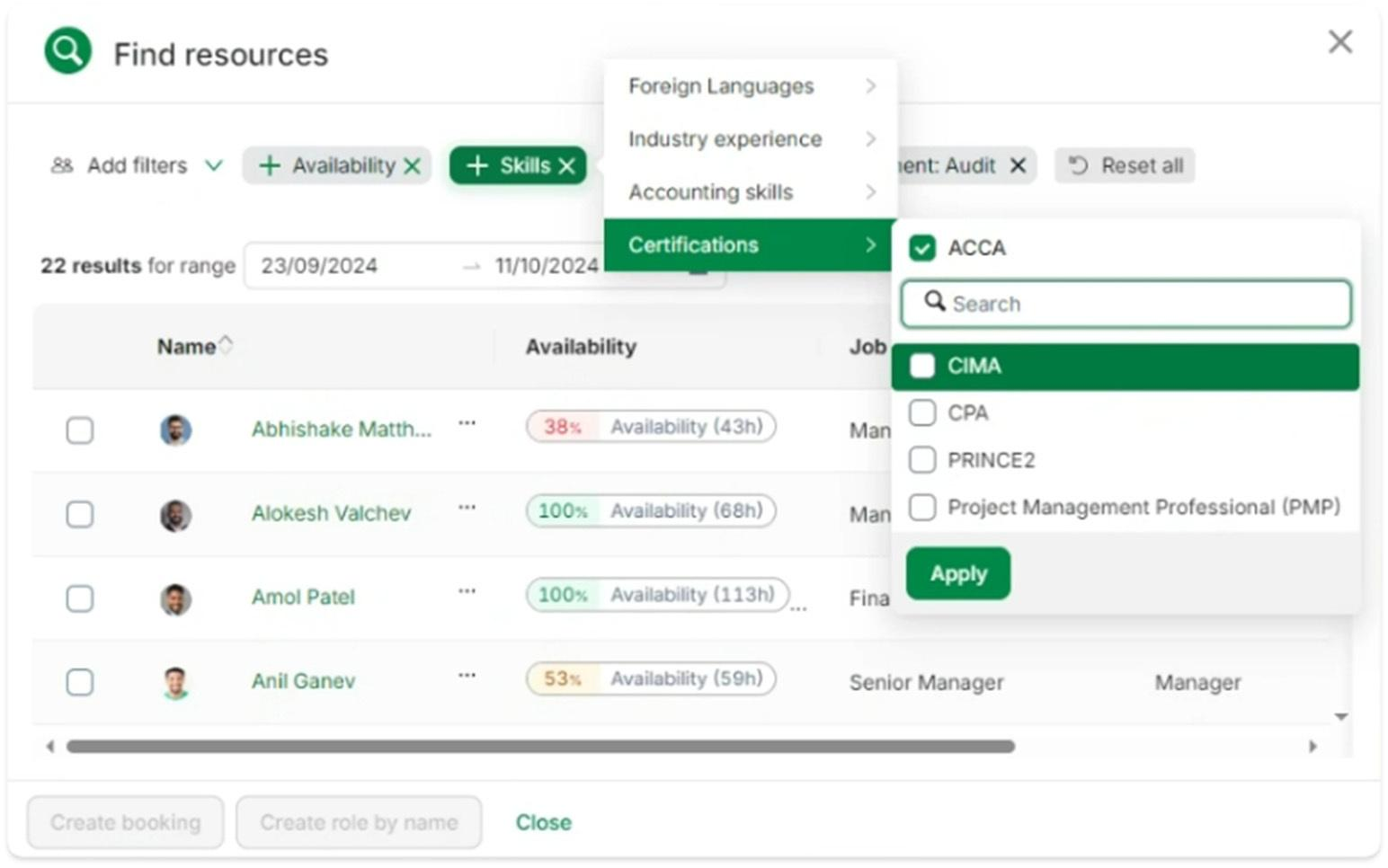
[By connecting skills data to planning, scheduling and project delivery, organisations can assign the right expertise to the right work while maintaining visibility into capability gaps and development opportunities.]
Five capabilities every organisation should expect
✔️ A standardised skills framework
Everyone across the business speaks the same language, making expertise easier to find, compare and plan around.
✔️ Connected workforce data
Skills sit alongside project experience, availability, utilisation and future demand, creating a single view of organisational capability.
✔️ Intelligent resource matching
Instead of manually searching for the right people, resource managers can identify suitable candidates based on skills, experience, proficiency and availability.
✔️ Real-time workforce visibility
Leaders can see where capability is concentrated, where gaps are emerging, and how workforce decisions affect delivery and growth.
✔️ Forward-looking workforce planning
Rather than reacting to today's resource requests, organisations can model future demand, identify potential shortages and invest in capability before it becomes a business risk.
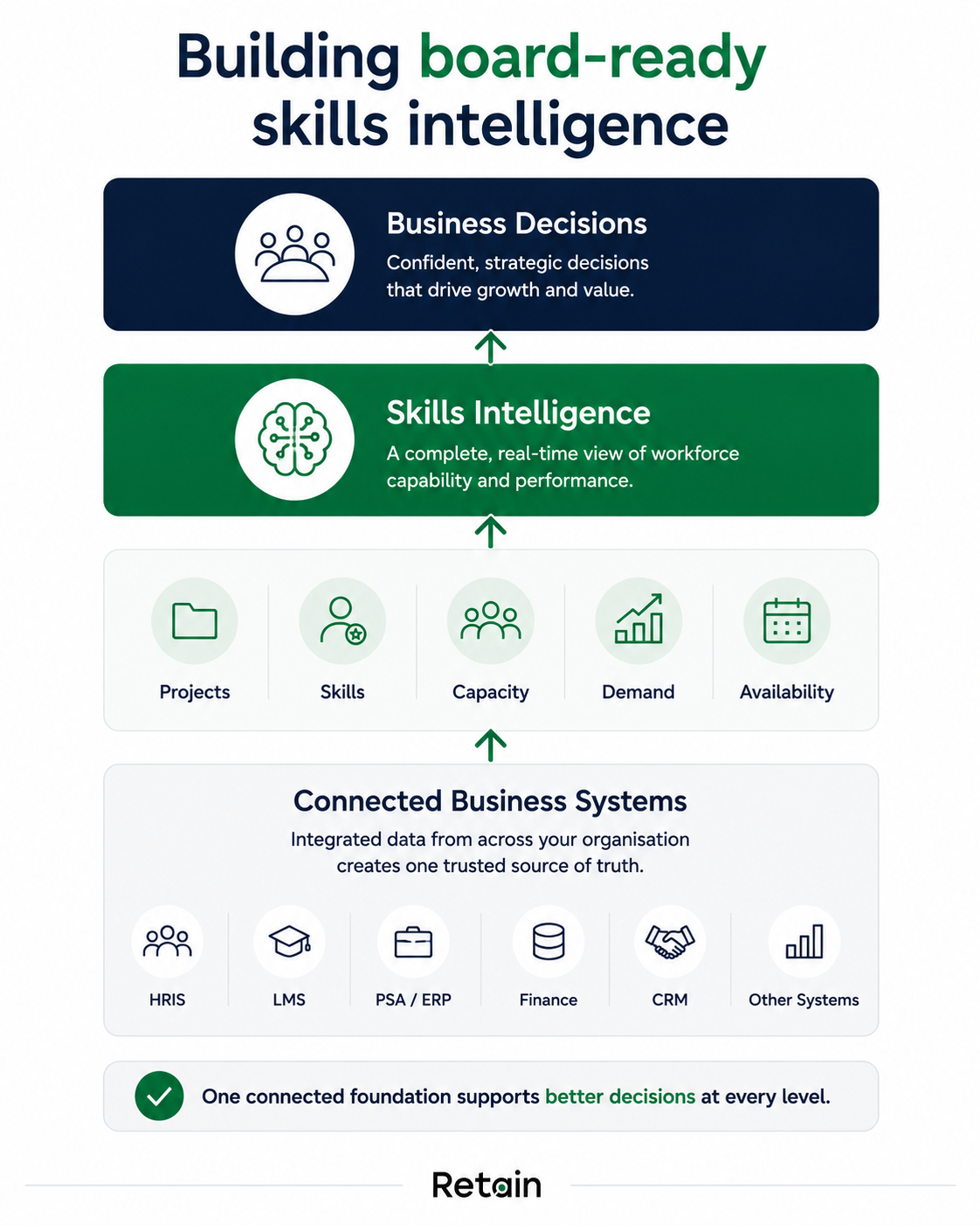
Platforms like Retain Cloud bring these elements together in one place. By combining AI-powered matching, a standardised skills taxonomy, real-time workforce visibility and integration with HR, CRM and project systems, organisations gain a far clearer understanding of the capability they already have.
In short, this means faster staffing decisions, better utilisation, and greater confidence when planning for growth.
Skills intelligence is a competitive advantage
Every organisation has people. Every organisation has skills. The difference is that some organisations can see them clearly, while others are still making decisions with only part of the picture.
As markets change faster, technologies evolve, and client expectations continue to rise, leaders need confidence that their workforce can deliver what's coming next.
That's why skills intelligence is becoming a board-level asset. It gives leaders a clearer understanding of where expertise exists today, where future risks are emerging, and how talent can support long-term business strategy.
If you’re on the fence about whether you need better skills intelligence, here are five questions every board should be asking:
✔️ Do we have the skills to deliver our strategy over the next three to five years?
✔️ Where are we overly reliant on a small number of people or specialist capabilities?
✔️ Could we unlock more value from the talent we already have before hiring externally?
✔️ Are we investing in the skills that will matter most in the future?
✔️ Do we have the workforce intelligence needed to make confident business decisions?
The organisations that answer "yes" to those questions will make faster decisions, adapt more quickly to change, and be better equipped to deliver sustainable growth.
Ready to understand the skills already inside your organisation?
Discover how Retain helps organisations turn workforce data into skills intelligence, giving leaders a clearer view of capability, capacity and future workforce needs.
P.S. Did you know? We cover topics like this regularly. Our free ebooks and webinars go deeper, and you can follow us on LinkedIn for the latest.
