








When done well, IT consulting resource planning is one of the biggest influences on profitability, yet many firms treat it as an operational task. The deal is signed. The statement of work is approved. Everyone assumes delivery can begin.
Instead, resource managers are piecing together answers. Who has the right skills and team fit? Who's available? Has another project already claimed them? These questions are often answered through spreadsheets, emails, and conversations across different teams.
One resource manager described spending "hours every single week just piecing together static reports." Others talk about guesswork, endless back-and-forth, and projects taking days or even weeks to staff.
If you’ve ever found yourself asking three different people who’s available and actually right for the project, you’ll know the feeling. Meanwhile, every day spent building the right team delays the first billable hour. Every manual staffing decision increases the risk of compromising on skills, utilisation, or project margins.
So where does the revenue disappear?
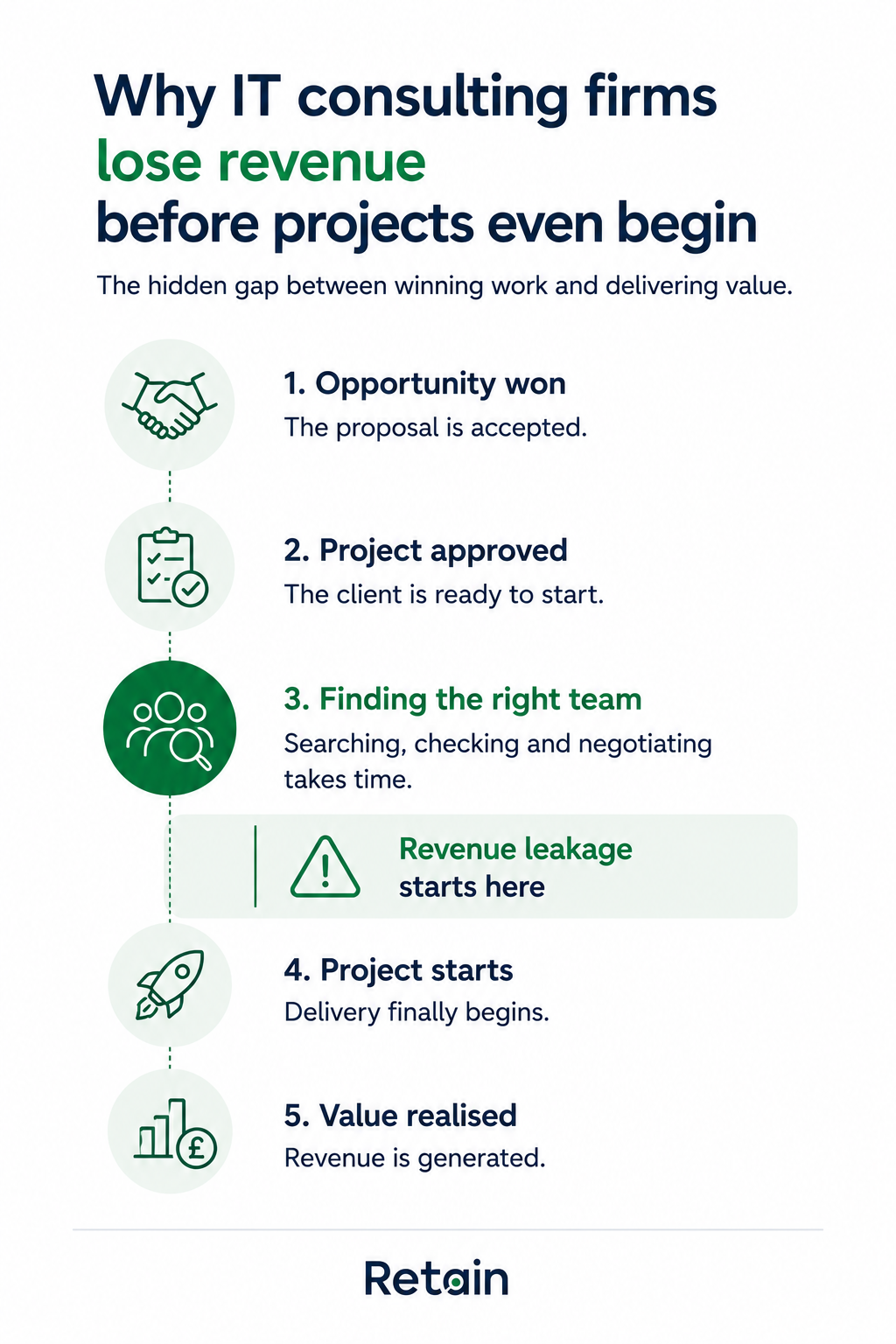
The disconnect: winning the deal vs mobilising the team
Most IT consulting firms have invested in the systems that support sales, finance, and project delivery. CRM platforms track opportunities, ERP systems manage budgets, and project tools keep delivery on schedule.
Yet resource and project managers are left piecing together information from HR systems, spreadsheets, calendars, project plans, and conversations with delivery managers before they can answer who the best person is to put on the project.
It sounds simple, but anyone who’s tried will know it isn’t that easy.
As IT and software consulting firms grow, things only become more complex. Skills are spread across multiple teams, consultants move between projects daily, and availability can change within hours. Multiply that across dozens of projects and hundreds of consultants, and things become surprisingly difficult to keep track of.
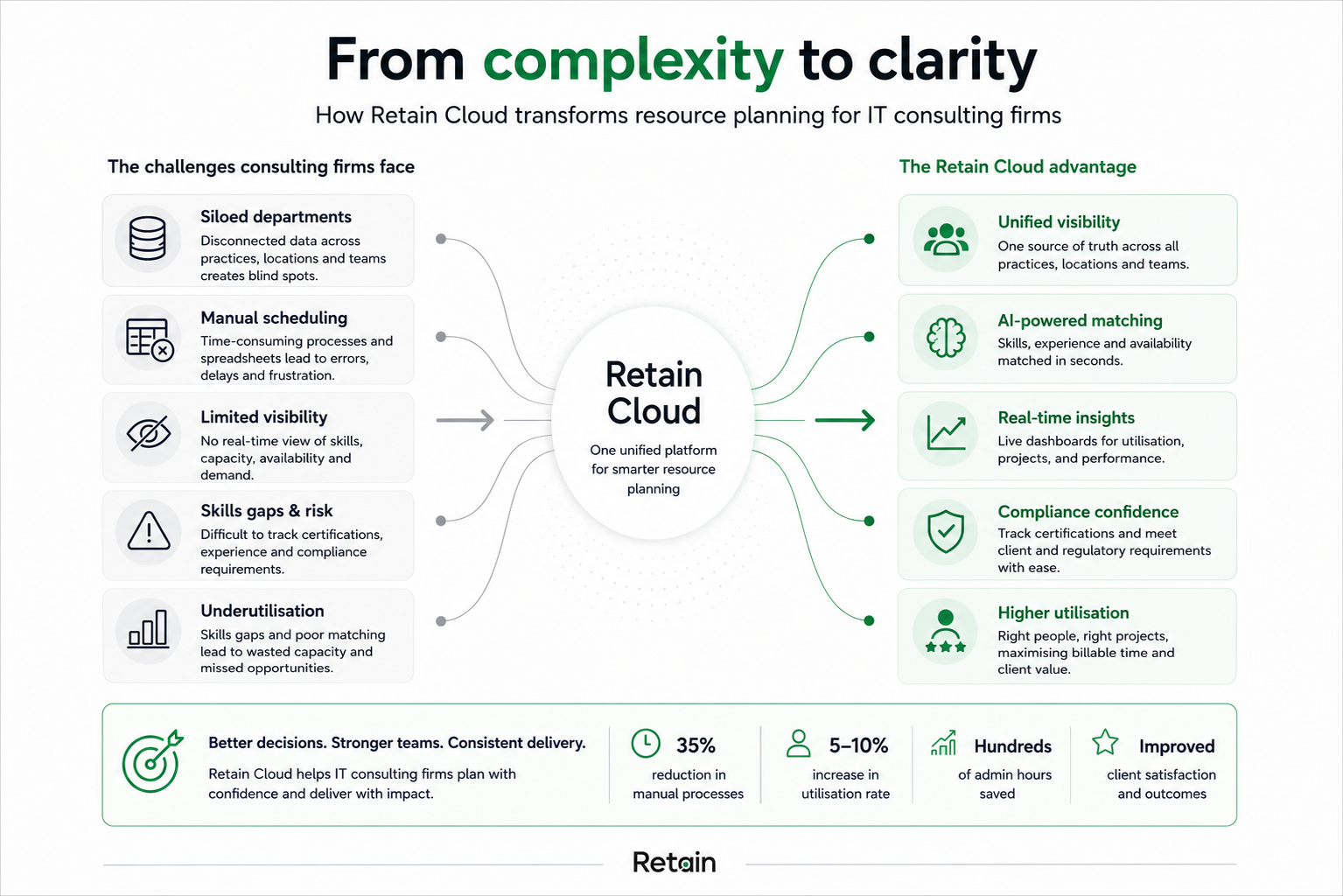
Without a live view of skills and capacity, staffing decisions become slower and rely on individual knowledge rather than reliable data. The result is a familiar cycle of guesswork, back-and-forth conversations, and manual checks that delay project mobilisation and consume valuable non-billable time.
Does this sound familiar?
✔ The project has been sold, but nobody knows who can start.
✔ A consultant is available, but you're not sure they have the right experience.
✔ The ideal person is already booked on another engagement.
✔ Staffing decisions rely on asking around instead of searching trusted data.
✔ Projects start later than clients expected because assembling the team takes longer than anticipated.
Four revenue drains stalling project delivery
Once a project is sold, every staffing decision has commercial consequences. The faster you can assemble the right team, the sooner work begins, invoices are raised, and project margins are protected.
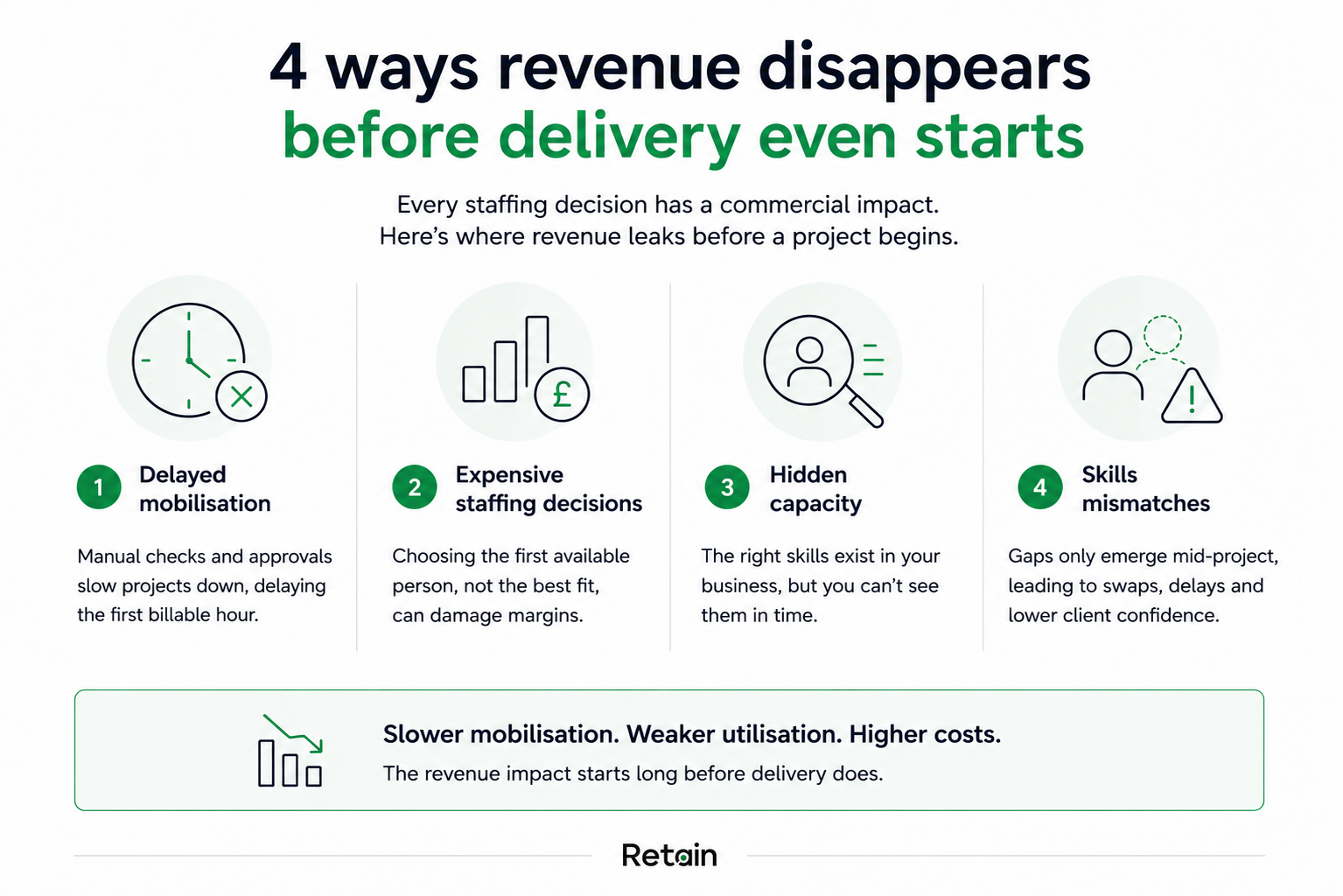
Here are four of the biggest ways consulting firms lose revenue before delivery has even started:
1. Delayed project mobilisation
Resource managers need to confirm availability, validate skills, resolve scheduling conflicts, and secure approvals before consultants can start work. Every extra day spent staffing the project is another day without billable work, delaying revenue and increasing pressure on delivery teams to make up lost time later.
2. Suboptimal staffing decisions
The first available consultant isn't always the best commercial choice. Every allocation affects project profitability. Experience, bill rates, utilisation, and the balance of the wider team all influence whether a project delivers healthy margins. Without visibility into these factors, firms often make decisions based on convenience rather than commercial impact. Under deadline pressure, that’s an understandable call to make.
3. Overlooked internal capacity
Most consulting firms already have the expertise they need. The challenge is knowing where it is. When skills are spread across spreadsheets, HR systems, project tools, and individual managers' knowledge, capable consultants are easily overlooked. Some people remain underutilised while others become overloaded, creating unnecessary recruitment costs, lower utilisation, and frustrated employees. Of course, nobody is being careless here. The full picture just isn’t visible.
4. Skills mismatches that derail delivery
A project may begin with the best information available, only for gaps to crop up once delivery is underway. Perhaps a consultant lacks specialist experience, client requirements change, or someone more suitable simply wasn't visible during planning. Mid-project resource swaps disrupt delivery, increase costs, and reduce client confidence, all while placing additional pressure on already busy teams. (And nobody enjoys having that conversation with a client halfway through delivery.)
The cumulative impact of these issues is pretty huge. Slower mobilisation, weaker utilisation, unnecessary rework, and delayed revenue all begin before the first milestone is delivered. That's why leading consulting firms increasingly view resource planning as a commercial capability rather than an admin process.
Why spreadsheets struggle as IT consulting firms become more complex
Chances are you're living this already, so none of it will be news. But it's worth a quick recap of why the cracks appear.
Spreadsheets have earned their place in consulting. They're flexible, familiar, and often the quickest way to solve an immediate problem. And yet, while that’s true, today's IT and software consulting firms are operating at a completely different level of complexity!
This is a key topic at our recent webinar.
We hear all the time how resource managers are balancing specialist skills, project priorities, utilisation, bill rates, client preferences, certifications, and future demand, often across multiple offices, business units, or countries. At the same time, project plans change, consultants move between engagements, and new opportunities enter the pipeline every day.
A spreadsheet can capture a snapshot of that information, but it can't keep pace with how quickly it all changes.
This explains why many resource managers find themselves piecing together data from CRM platforms, ERP systems, HR software, project management tools, and spreadsheets before they can make a confident staffing decision. The information already exists; it's simply spread across too many places!
For more on this, you might enjoy our ebook:
How high performing IT consulting firms automate resource planning
The most successful consulting firms make decisions using a system -like Retain- with live operational data that connects people, projects, and commercial priorities in one place.
This means resource managers can answer any resourcing question in seconds.
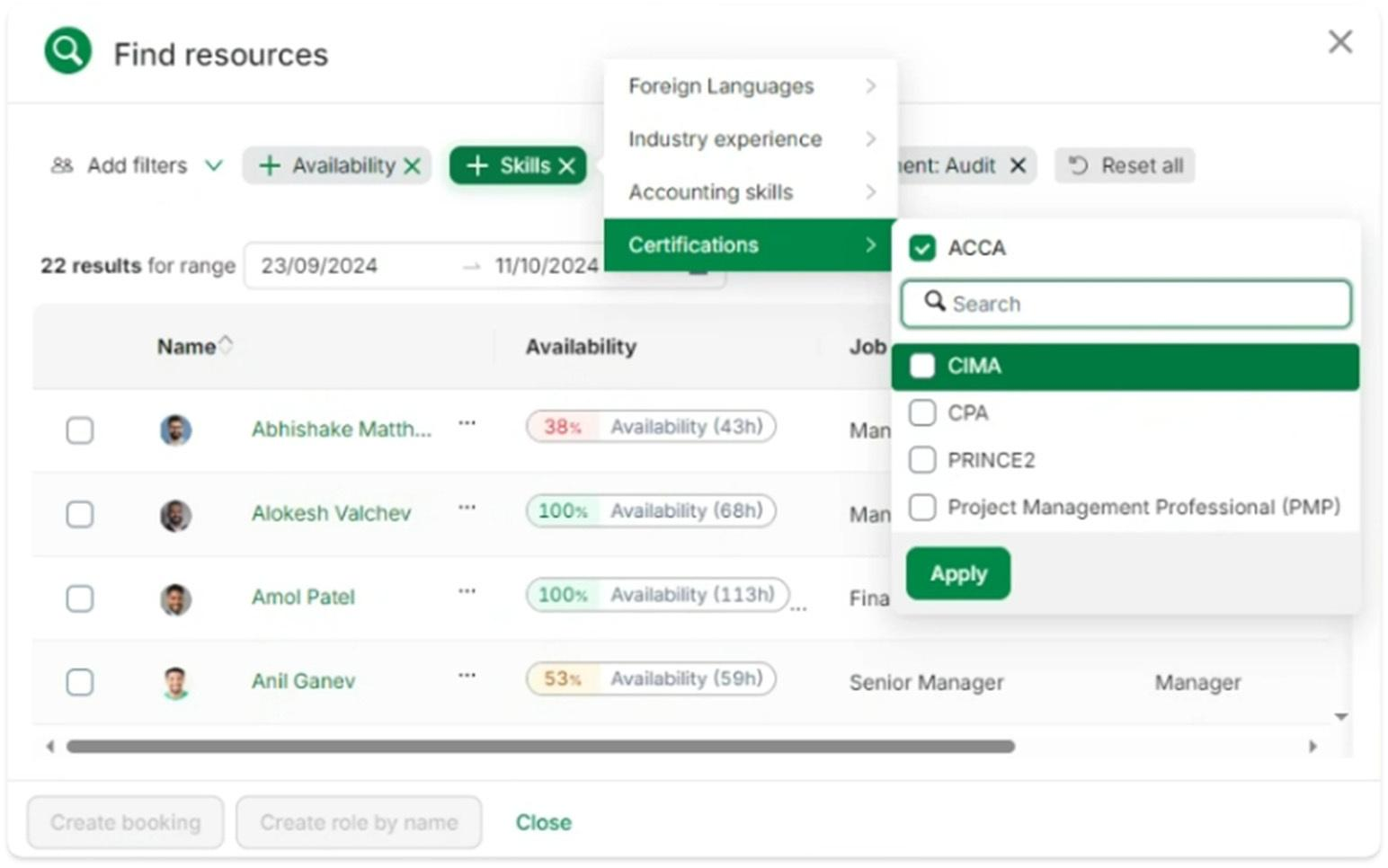
They can search for consultants by verified skills and experience, instantly see who's available, compare utilisation and project commitments, and understand the commercial impact of different staffing decisions before assigning anyone to a project.
A little bit like this…
One more point on this.
Instead of asking, "Who's free?" they're asking, "Who's the best fit for this engagement?"
Answering that question alone changes the quality of every resource decision.
It becomes easier to build balanced project teams, make better use of specialist expertise, and identify consultants who might otherwise remain hidden within the business. At the same time, delivery leaders gain greater confidence that projects can start on schedule without compromising quality or profitability.
Platforms such as Retain Cloud bring these decisions together by connecting workforce, project, and financial data into a single planning environment. Rather than switching between multiple systems (or tabs), resource managers can view skills, availability, utilisation, suitability, and project demand in one place, giving them the visibility to mobilise projects faster and make more informed commercial decisions.
As IT consulting firms continue to grow in size and complexity, this connected view is becoming a competitive advantage. Faster staffing leads to earlier project starts, stronger resource utilisation, and greater confidence that the right people are being deployed to the right work at the right time.
Curious how peers in audit and consulting handled their resource mobilisation? Read how one firm increased utilisation by more than 5%.
Resource planning is a commercial capability for IT consulting firms
For years, resource planning was viewed as an operational function. Its job was to keep consultants busy and projects staffed.
These days, it influences far more than utilisation.
Every staffing decision affects how quickly a project starts, how profitable it becomes, and whether the right expertise reaches the client at the right time. It also shapes employee development by ensuring consultants gain the experience they need to grow, rather than simply filling the next available gap.
When workforce, project, and financial data come together in one place, resource managers can make faster, more informed decisions that support both delivery and commercial performance.
Key takeaways
✓ Revenue can start leaking before a project is even underway.
✓ Faster staffing helps projects begin sooner and protects billable time.
✓ Better visibility into skills and capacity leads to stronger resource decisions.
✓ Connected planning improves profitability, delivery, and client experience.
✓ Commercial success starts with putting the right people on the right projects at the right time.
If any of this feels uncomfortably familiar, it's probably worth taking a closer look at how your planning process works today. Book a personalised demo of Retain Cloud.
P.S. Did you know? We cover topics like this regularly. Our free ebooks and webinars go deeper, and you can follow us on LinkedIn for the latest insights.
