Most project managers see resource constraints as obstacles. But what if they’re actually opportunities in disguise?
According to recent research by the Project Management Institute, 48% of projects face resource constraints that significantly impact delivery. Yet interestingly, some of the most innovative solutions come from teams working with the tightest limitations.
Of course, that’s why you’re reading this—you’re looking for practical ways to turn your resource constraints into genuine advantages. Let’s dive in.
Today’s resource constraint challenges

Resource constraints aren’t what they used to be. A decade ago, limitations typically meant straightforward budget cuts or tight deadlines.
Now, things are considerably more complex.
Today’s resource constraints involve finding people with highly specialised skills, coordinating global teams across different time zones, and managing hybrid working patterns that complicate resource visibility.
A study by Gartner found that 71% of HR leaders cite poor resource allocation as a major barrier to project success. So, in addition to having enough resources, you also need to know exactly what resources you have and use them optimally.
This complexity creates a sort of resource fog where teams can’t see what they actually have available. You might be surprised how often organisations hire contractors while having perfectly capable internal resources sitting underutilised.
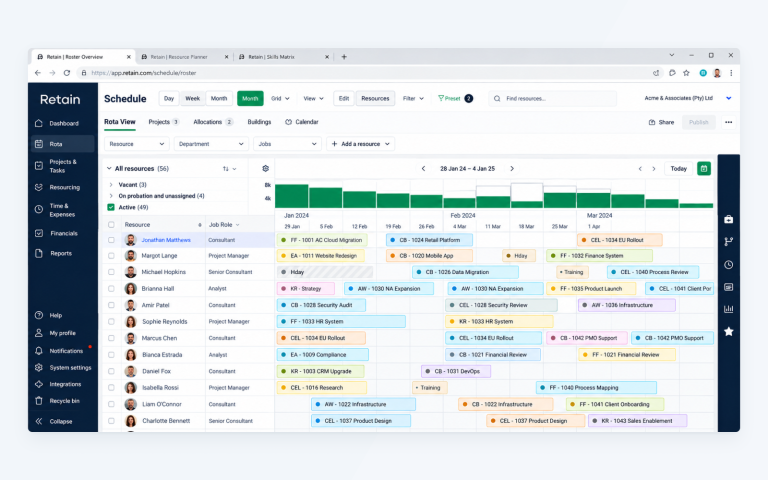
Naturally, this is where having a clear, real-time view of all your resources becomes invaluable.
Thinking strategically about resource constraints
The most successful project teams actively embrace constraints as parameters that drive better outcomes.
Consider how a global engineering and automation leader transformed its approach to resource constraints. As it scaled across EMEA, it moved resource requests out of scattered emails and Teams messages into one central platform. That gave every regional team a live view of availability.
The result? Allocation no longer depended on team leads personally knowing which engineers were free and what they could do. Planning held up even when key people were on leave.
So, perhaps the key difference between teams that struggle with constraints and those that thrive is visibility. Without clear insight into available resources, constraints feel like roadblocks. With visibility, they become boundaries that actually help define the best path forward.
This change in perspective is powerful. It transforms conversations from “We can’t because we don’t have enough” to “Given what we have, what’s the smartest approach?“
By the way, this mindset shift doesn’t happen automatically. It requires the right resource planning tools and processes to give teams confidence in their resource visibility.
Practical resource constraint strategies
So how do you actually turn resource constraints into advantages? Here are some practical approaches that work:
1. Skills-based resource allocation offers a more thoughtful way to deploy limited talent. Instead of assigning people based solely on availability, match them to projects that align perfectly with their capabilities. This often reveals hidden capacity you didn’t know existed. For instance, the world’s fifth-largest accounting, audit and tax firm replaced manual Excel allocation with Retain. It can now track and find resources that match each client’s needs and projects, and schedule technical training to close skill gaps.
2. Capacity forecasting helps prevent future constraints by identifying potential bottlenecks before they happen. This gives you time to develop contingency plans or redistribute workloads.
3. Resource negotiation frameworks provide a structured approach to discussing constraints with stakeholders. Instead of simply saying “we don’t have enough resources,” you can present data-driven alternatives that keep projects moving forward.
4. Scenario planning lets you model different resource allocation possibilities before committing. By testing various “what-if” scenarios, you can identify the most efficient use of limited resources and prepare contingency plans for potential changes in project scope or timeline.
5. Client-aligned scheduling coordinates project timelines to match natural ebbs and flows in client demand. Firms like James Cowper Kreston do this by rolling recurring work forward and planning 12 months ahead. That balances workloads more evenly through the year rather than creating resource crunches during peak periods.
6. Resource load balancing distributes work more evenly across your team to prevent burnout while maximising productivity. As Rickard Luckin discovered after implementing proper resource planning, this approach can save significant administrative time while improving employee satisfaction.
Side note: These strategies work particularly well when everyone has access to the same resource information. That’s why transparent, centralised resource planning makes such a difference.
Tools that transform resource constraints
Let’s be honest—spreadsheets just don’t cut it anymore for serious resource planning.
Modern resource management solutions, like Retain, offer capabilities that fundamentally change how teams handle constraints:
✅ Real-time resource visibility across all projects and teams
✅ Skill matching that identifies the right people for specific tasks
✅ Scenario planning to test different resourcing approaches
✅ Early warning systems for potential resource bottlenecks
✅ Utilisation tracking to identify underused capacity
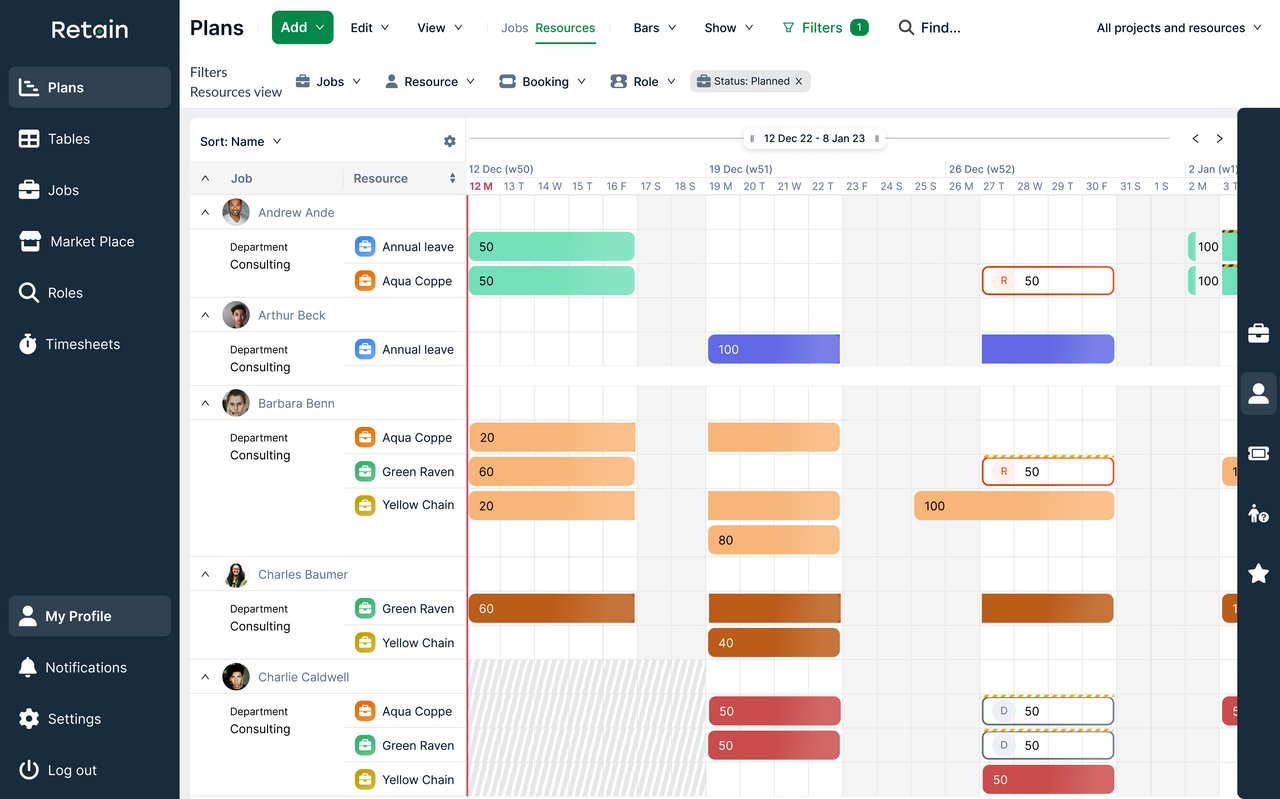
Better yet, the right tool helps you spot opportunities hidden within them. Often, what looks like a resource shortage is actually a resource allocation problem that the right technology can solve.
You know what makes the biggest difference? Having all your resource data in one place, accessible to everyone who needs it. This shared visibility transforms how teams approach constraints.
Measuring resource constraint success
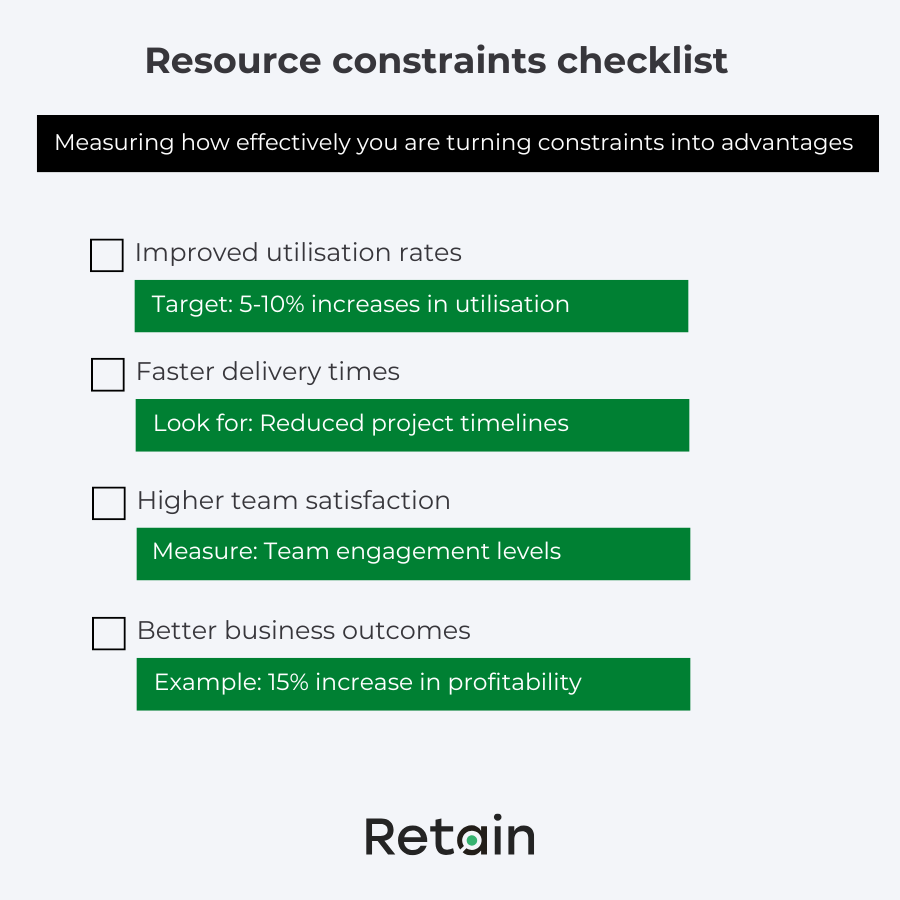
Now that you know how to turn resource constraints into project advantages, how do you know if you’re successful? Look for these indicators:
⏹️ Improved utilisation rates tell you you’re getting more value from existing resources. Many organisations see 5-10% increases in utilisation after implementing proper resource planning—that’s a significant gain without adding headcount.
⏹️ Faster delivery times often result from better-matched resources and clearer priorities. When constraints are visible, teams waste less time on poor allocation decisions.
⏹️ Higher team satisfaction emerges when people are matched to work that suits their skills. Resource constraints feel less stressful when everyone understands the parameters and has input into solutions.
⏹️ Better business outcomes ultimately validate your approach. Gerald Edelman, a leading accounting firm, found they could eliminate issues related to under-booking and over-booking after improving their resource visibility, leading to clearer insights into the firm’s resourcing needs.
The business case becomes clear: effective constraint management isn’t just about surviving with less—it’s about optimising what you have for better results.
Rethinking your approach to constraints and resources
Ready to transform how your organisation handles resource constraints? Start here:
1. Assess your visibility gap – How clearly can you see all available resources across your organisation? Where are the blind spots?
2. Identify your most pressing constraint – Is it people, skills, time, or something else? Focus on solving your biggest limitation first.
3. Evaluate your current tools – Are they giving you the real-time resource visibility you need? If not, what’s missing?
4. Start small but think big – Begin with one team or project type, demonstrate success, then expand.
Remember what Chris from Gerald Edelman advises: “Ensure your input data is accurate. The setup and how you record your jobs are crucial to fully benefiting from resource planning. Proper data management is key to unlocking the full potential.”
Resource constraints aren’t going away. In fact, they’re likely to become more complex. But with the right approach, they can become parameters that drive innovation rather than obstacles that block progress.
Keen to learn more? Book a demo to see Retain in action.
Our editorial process
Written from interviews with resource managers in IT consulting firms, alongside anonymised patterns from Retain customer data. Direct quotes are used with permission and lightly edited for length.
Reviewed for accuracy by Retain’s resource management practice leads before publication. Claims about outcomes are checked against source data or removed.
The summary at the top of this page is generated from the article text. The article itself is written and edited by people. AI is not used to draft claims, quotes or data.
Spotted something wrong? Email editorial@retaininternational.com and we will correct it, noting the change at the foot of the article.